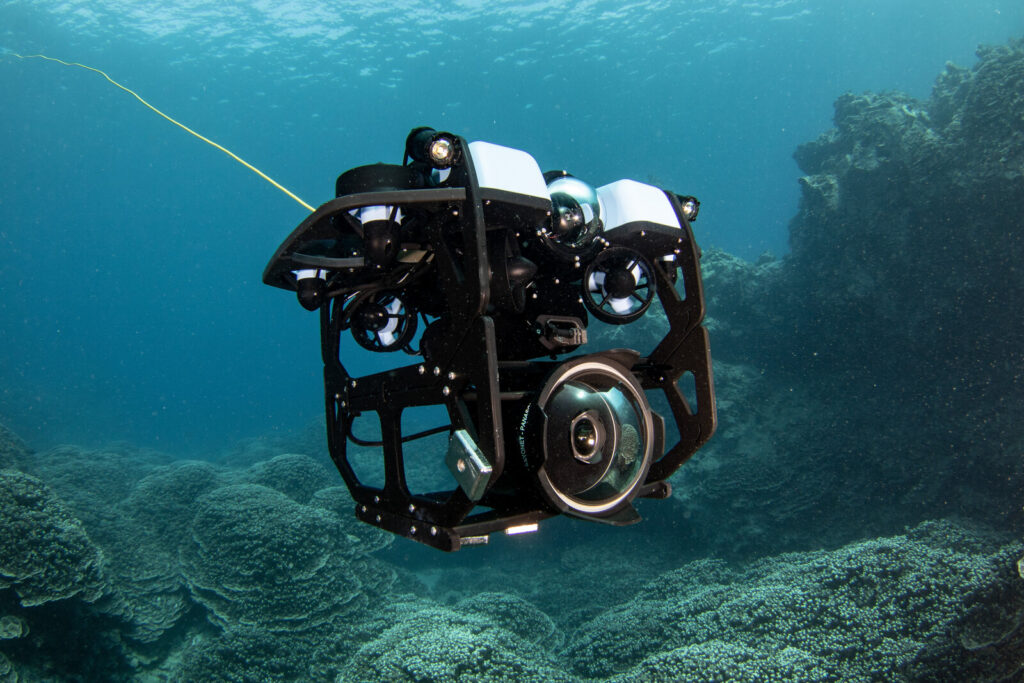
An underwater robot in this sense is a tethered vehicle with thrusters and buoyancy that a person still flies from a topside computer. It is the right tool for a careful look, and it becomes a different tool when a gripper or sampler is added. It stops being the right tool for work that still needs a diver in the water or a ship’s launch crew for a heavy vehicle, and it is never a weapon.
Right for this job: A camera-led look under a dock, along a hull, or across a shallow site when a pilot on the surface still flies the vehicle through a tether.
Wrong for this job: Treating a camera-only kit as a gripping or sampling machine, or treating a pool toy with no tethered pilot link as this class of vehicle.
The number that decides it: Six thrusters in the base layout (four vectored, two vertical)—motion is commanded; a gripper is not included.
What the spec leaves out: Whether the recording has a subject, a standoff distance, and a way to find the same place again; whether you bought a positioning sensor for hold modes.
Check before you rely on it: Confirm the tether is in the kit, that a gripper or sampler is listed as an add-on if you need one, and that position hold is marked as needing a positioning system.
Last checked: September 29, 2026
What the thrusters, the foam, and the tether are doing
NOAA Ocean Exploration defines an ROV—remotely operated vehicle—as an unoccupied underwater machine operated by someone at the water surface. A group of cables, the tether, connects the vehicle to the ship or surface station and carries signals both ways. That definition is the useful starting point: the “robot” label does not remove the person from the loop.
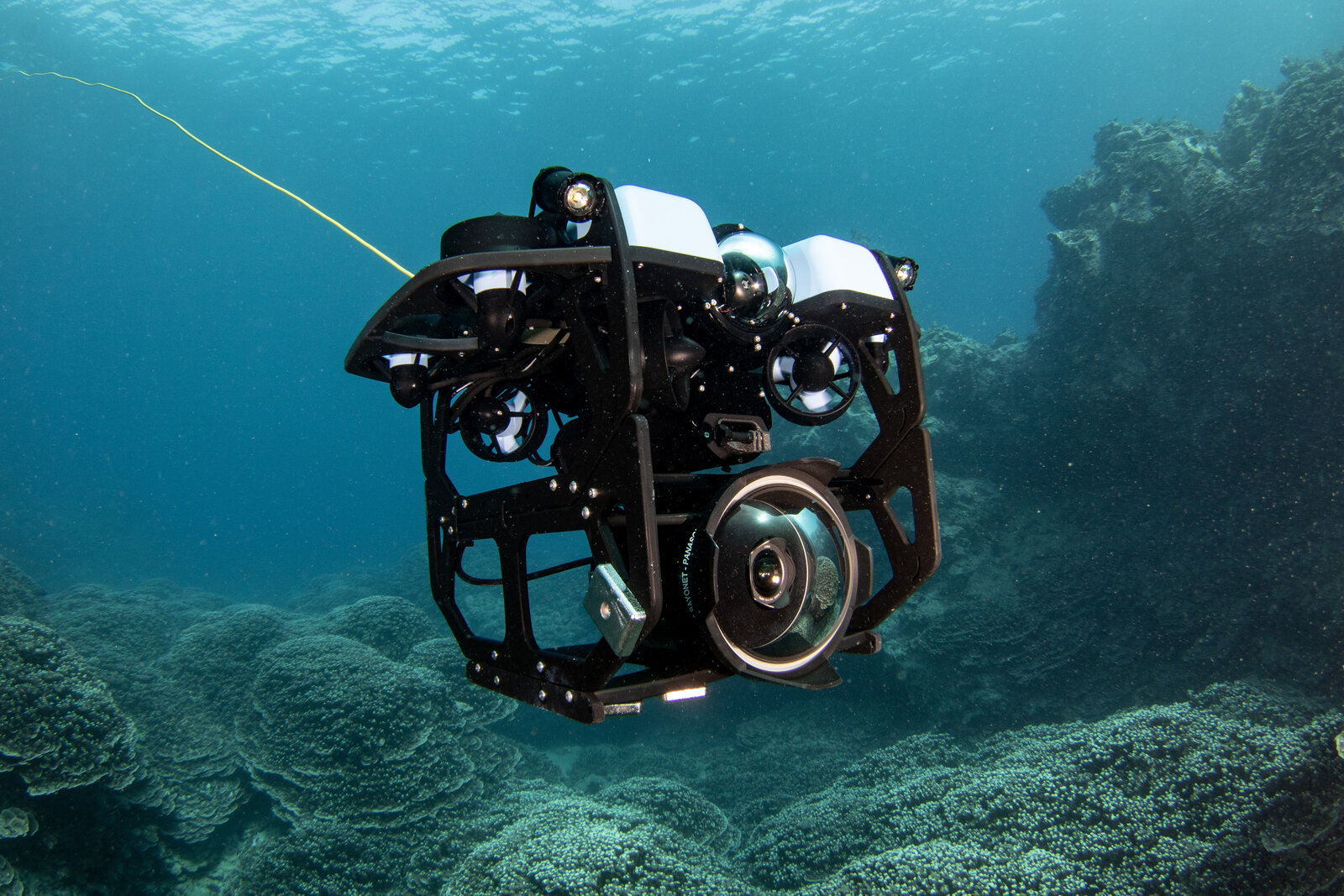

On a widely sold small kit used here as a concrete example, not as a sales pitch, the thruster layout is explicit. The product page states a configuration of six thrusters: four vectored for horizontal work and two vertical for climb and descent. Those motors push water; they do not invent intent. The pilot on the topside computer tells them when to run.
Buoyancy is set before the interesting work starts. The same product page lists buoyancy foam in the fairings and nine 200-gram ballast weights in the kit. Weight in air with the default ballast and a Blue Robotics lithium-ion battery is given as 11–12 kg; without ballast or battery it is 9–10 kg. The operating guide tells the pilot to adjust that ballast until the vehicle is as close to neutrally buoyant as possible—neither floating away nor sinking—so the thrusters are not fighting a constant imbalance. If you leave the foam and weights wrong, you do not have a smarter robot; you have a harder stick to fly.
The tether is not optional for this class of vehicle. The buyer’s guide states that radio waves do not travel far through water, so a physical connection is required to operate the ROV. The base package includes the vehicle and a tether interface box that connects to a computer; you still have to choose a tether length. Wireless marketing language does not replace that cable for this design. A battery is also required and is sold separately because of shipping limits on high-capacity cells. Power and the control link are therefore not mysteries of autonomy—they are parts you assemble and a cable you manage.
Depth rating on the housing—100 meters with acrylic tubes or 300 meters with aluminum on this kit—is a pressure limit for the enclosures and related parts. It is not what makes the machine a robot. A sealed tube that can go deep is still just a sealed tube until thrusters, buoyancy, a tethered control link, and a person on the sticks turn it into a flown vehicle.
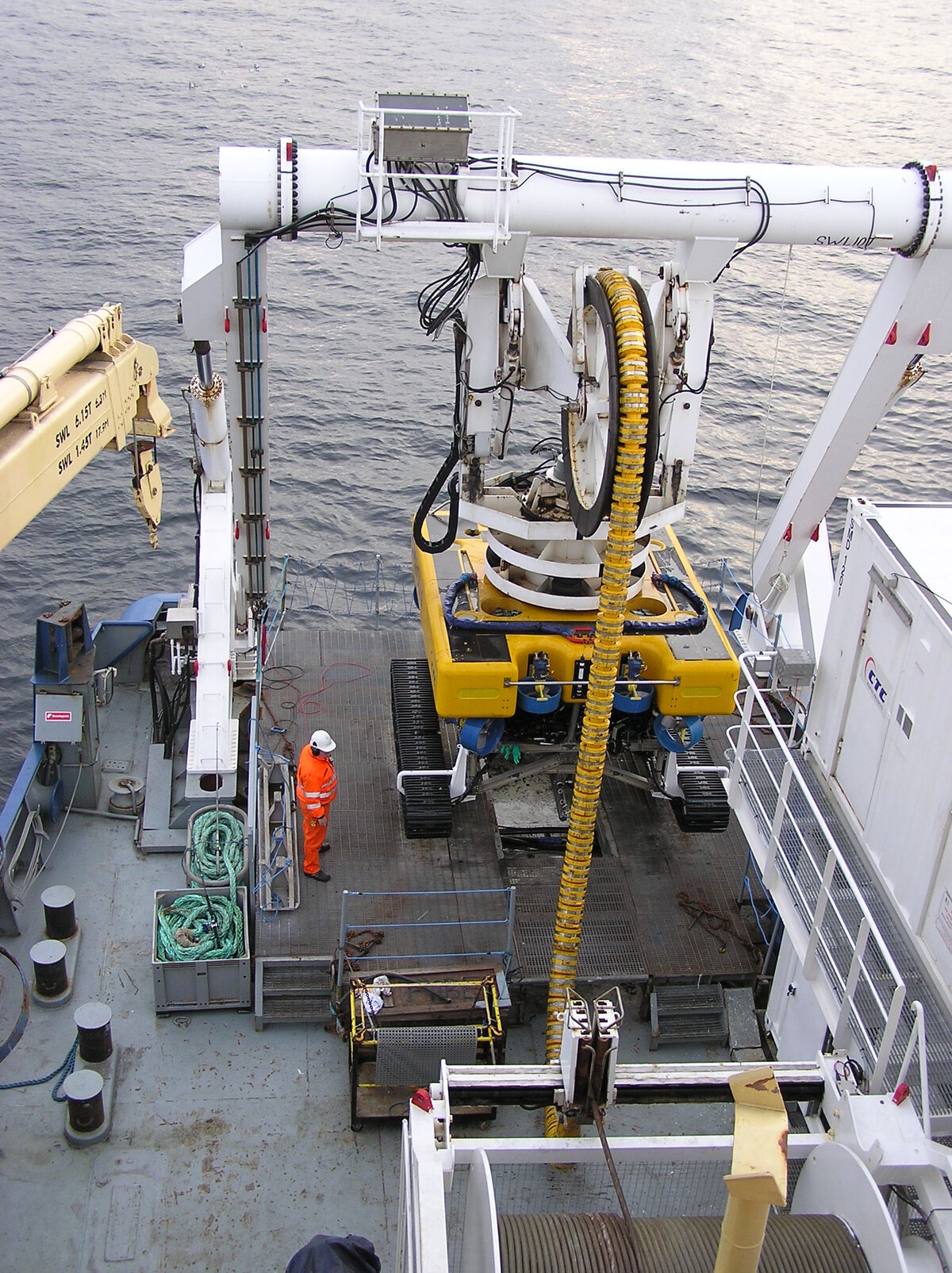

NOAA’s page notes that a person typically controls the machine from a surface vessel with a joystick, and that larger ROVs are heavy enough to need winch gear to put them in the water. Blue Robotics’ operating guide puts the same person-in-the-loop idea in flight modes: in Manual Mode the vehicle only does what the joysticks command—no feedback stabilization, heading hold, or depth hold. Depth Hold keeps depth unless the pilot commands climb or descent. Position Hold is available only when a positioning system is present. The buyer’s guide lists a Doppler velocity log (DVL) as an add-on that enables position holding and related navigation. The base vehicle does not hold position by itself. Stabilize and depth modes still leave a human deciding when to move.
How an observation pass fails differently from a tool pass
An observation vehicle is built to look. Its job is a useful picture: a subject in frame, enough light, and enough control that the pilot can hold a viewpoint long enough to understand what is there. What a hull-inspection ROV has to record is that kind of look—a picture tied to position so the same place can be found again—not a grab. A gripper is not that recording. If your job is to document a patch of coating, a propeller edge, or a net panel, the failure mode is a blurry, unlocated, or incomplete view, not an empty sample jar.
A vehicle that carries a tool or a sampler is a different machine in practice even when it shares a frame. The buyer’s guide lists the Newton Subsea Gripper as an accessory for picking up small objects, attaching a recovery line, or freeing a snagged tether. A sediment sampler attachment for that gripper is named on the same page as an option that collects a small volume of sediment. Naming that it exists is enough here; this article does not walk through sampling at a restricted site. The Heavy configuration upgrade adds thrusters and buoyancy foam so the vehicle can pitch and look down more usefully when a tool is mounted. Those lines matter because they admit the truth: gripping and sampling are add-ons, not the camera-only layout in disguise.
An observation pass fails when the pilot cannot keep the subject readable, when the tether snags and the look ends early, or when there is no way to relate the image to a place. A tool pass fails when the jaws never reach the object, when pitch and ballast fight the payload, or when the pilot treats a still photo as proof that something was recovered. Mixing those failure modes is how people buy the wrong kit.
A pool toy with no tether to a pilot and no way to hold depth is not this vehicle. It may look “robotic” in a marketing still. It does not meet NOAA’s tethered, person-operated ROV definition, and it does not match the thruster-and-ballast operating model on the pages used here.
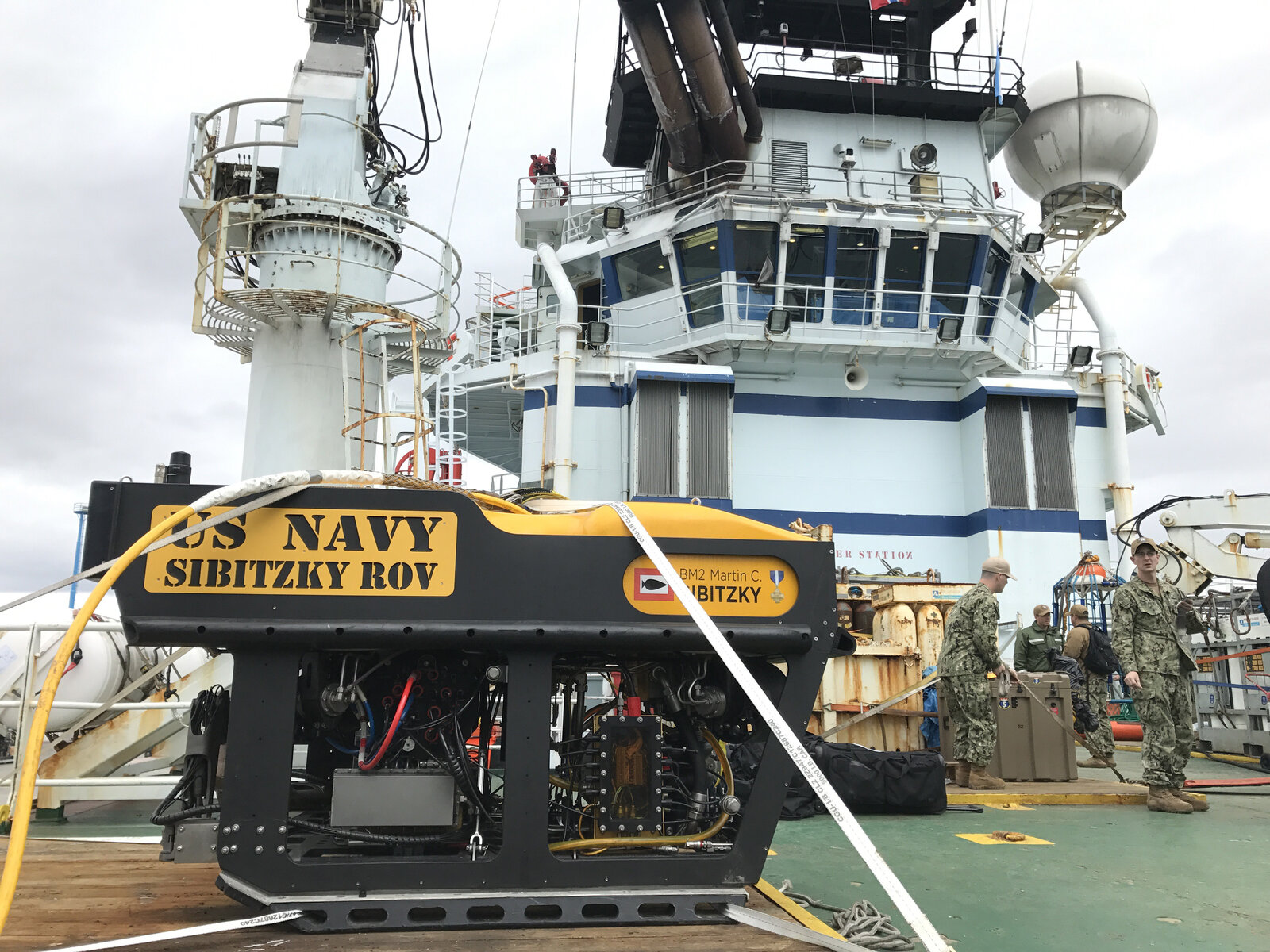
Some jobs still need a diver or a ship’s crew for reasons the opened pages do state. NOAA notes that ROV operations often let operators stay dry on deck, that ROVs can work where it is too deep for people to dive safely, and that they can stay down longer than a human diver—which is another way of saying shallow, hands-on, or short-access work is still where people get wet. NOAA also states that larger ROVs need other equipment such as a winch to launch from a ship. On the small-kit pages, the tether ends at a topside computer: someone on a boat, dock, or shore has to run that station and manage the cable. This article does not invent a legal rule that a named survey requires a diver or a licensed surveyor; no class-society or government survey standard stating that duty was opened for this piece. The checks that were opened are the maker’s control and configuration pages and NOAA’s definition page.
What the reader can check
Open the same pages and verify the claims yourself. All of the following were opened on September 29, 2026:
- https://bluerobotics.com/store/rov/bluerov2/ — thruster count (six: four vectored, two vertical); weight with and without ballast; buoyancy foam and ballast listed in the kit.
- https://bluerobotics.com/learn/bluerov2-buyers-guide/ — tether required because radio does not travel far in water; battery required; Newton Subsea Gripper as an add-on; DVL as an add-on for position holding; Heavy kit pitch for looking down with tools.
- https://bluerobotics.com/learn/bluerov2-operation/ — Manual Mode is joystick only; Depth Hold still needs the pilot to command climb or descent; Position Hold needs a positioning system; ballast is adjusted toward neutral buoyancy.
- https://oceanexplorer.noaa.gov/ocean-fact/rov/ — ROV defined as tethered and operated by a person at the surface; cameras and lights as the common baseline; manipulators and samplers described as additional equipment; large vehicles needing ship launch gear.
On the specification itself, confirm four things before you treat a quote as a work plan: thruster count and layout; whether a tether is required for communication; whether a gripper or sampler is included or sold as an add-on; and whether position hold needs another sensor. A useful recording still needs a subject, a distance, and a way to find the same place again. Calling the machine a robot does not supply those three.
The decision before you buy or launch
Decide which job you are buying for: observation vehicle, or a vehicle with a tool. If the work needs a hand on a fitting, a recovery line attached, or a sample brought up, the camera-only layout is the wrong machine—the buyer’s guide treats the gripper and sampler as accessories you add. If the operating page shows that the pilot must still command depth even in Depth Hold, do not buy the kit as a crewless substitute for a person. If you did not open a diver requirement for your site, the honest check is the maker’s control page and the NOAA definition of a person on the tether, not a law you did not read.
Buy observation when the deliverable is a look you can defend later. Buy a tool-ready layout when the deliverable is contact or recovery. Keep a ship or boat in the plan whenever the tether and topside computer have to live somewhere dry and powered, and keep a diver in the plan when the work is still a human hand in reachable water—without pretending a statute said so if you never opened one.
One specific sourced fact
The BlueROV2 product page states the thruster configuration plainly: six thrusters, four vectored and two vertical. That single line is enough to separate a flown observation platform from a toy that only drifts. The buyer’s guide adds the tether sentence that radio waves do not travel far through water, so a physical connection is required, and it lists the Newton Subsea Gripper as an add-on rather than a base inclusion. Those three statements, opened on September 29, 2026, are the spine of the comparison: thrusters for commanded motion, a tether because wireless is not a substitute here, and a gripper only when you choose the tool job.
The harmful mistake
The harmful mistake is treating a pool toy, or a camera-only vehicle, as a work robot that can sample or grip—or treating any of these vehicles as a weapon. A camera without jaws does not recover a fitting. A toy without a tethered pilot link does not become an ROV because the box used the word robot. And nothing in the definition, the thruster layout, or the tool add-ons turns a civilian look-or-grab machine into something to arm. Keep the jobs separate: look, or carry a tool, with a person still flying the vehicle. That is what an underwater robot is once it is not a pool toy.
Read next: How to compare two underwater drones without trusting the box · What a hull-inspection ROV recording must show