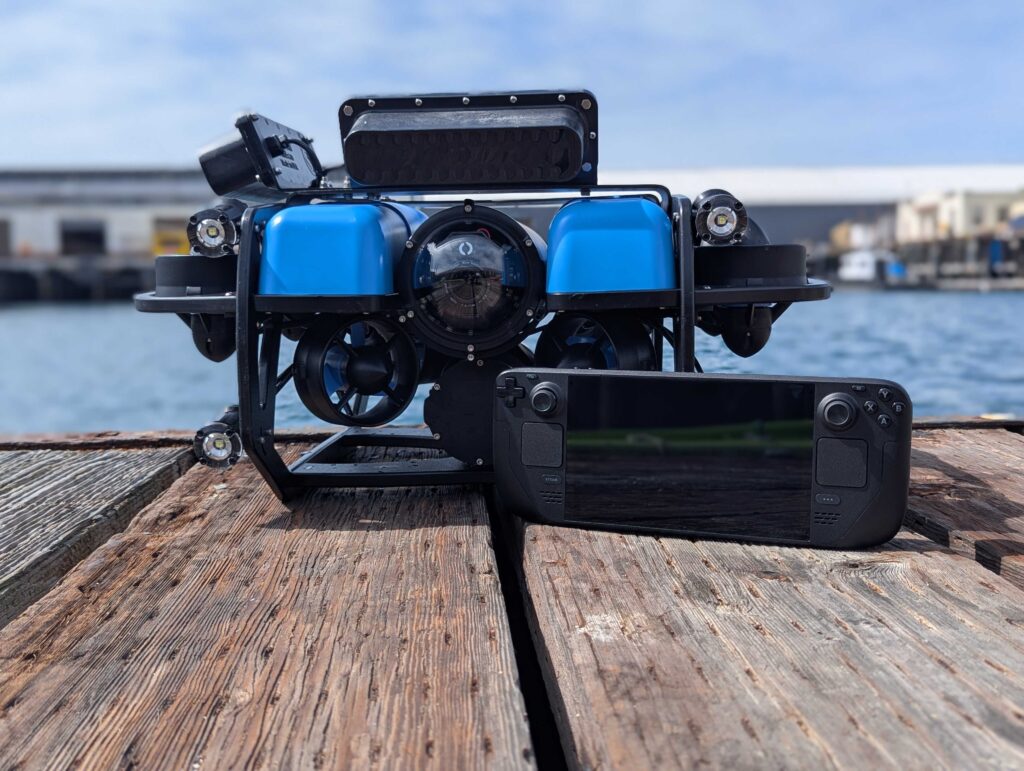
A swimming underwater vehicle and a fishing drop camera are different machines, even when both are sold as underwater drones. Blue Robotics’ BlueROV2 is a tethered vehicle with thrusters. Its operating guide gives it a depth-hold mode that keeps depth until the pilot commands a climb or a descent. Aqua-Vu’s FAQ describes a camera on a cable that you lower by hand, used from a boat that is stopped or moving slowly. Neither page ranks brands. They describe two tools that do different jobs. The figure you cannot compare, until the maker states the test, is a runtime that says only “normal use” or “light use.”
What to write down before you trust either box
- Right for this job: Use this comparison when you need to know whether a camera can stay at a chosen depth under its own thrusters, or whether a person has to hold it there with a cable. BlueROV2 depth hold and the Aqua-Vu hand-lowered cable are the two cases opened on September 29, 2026.
- Wrong for this job: Treating the largest depth printed on a page as the depth of the whole vehicle, or treating depth hold as a promise that the vehicle will stay over one spot on the bottom.
- The number that decides it: On the BlueROV2 product page the vehicle rating is 100 meters with acrylic tubes or 300 meters with aluminum tubes. On the Aqua-Vu FAQ, cameras and cables are waterproof from 60 to 125 feet depending on the model. The Aqua-Vu technology page instead says cables are depth-rated up to 150 feet.
- What the spec leaves out: The BlueROV2 product table ties about two hours of “normal use” and about four hours of “light use” to a 15.6Ah battery, and it does not define those two kinds of use. The current buyer’s guide lists 18Ah and 10Ah packs and does not restate those hours.
- Check before you rely on it: Read the vehicle rating next to the component table, read whether position hold requires an extra positioning system, and read the note that cast-acrylic depth ratings apply only to submersions shorter than two weeks.
- Last checked: September 29, 2026.
Pressure on the housing, thrust from the motors, and a cable in the hand
Water pressure rises as the vehicle goes down. The housing has to keep that pressure out of the electronics. On the BlueROV2, that housing is a pair of tubes: a larger electronics enclosure and a smaller battery enclosure. The product page lets you choose acrylic or anodized aluminum, and it states a different vehicle depth for each. Acrylic is rated to 100 meters. Aluminum is rated to 300 meters. The same page’s component table lists other parts with their own ratings. The watertight-enclosure guide says the lowest-rated component sets the rating of the whole assembly.
The BlueROV2 moves with six thrusters in the standard layout: four angled for forward and sideways thrust, and two vertical. The operating guide separates three ways those motors are used. In manual mode the motors follow the joysticks only, with no automatic depth or heading hold. In stabilize mode the vehicle levels its roll and keeps its heading when the pilot is not turning, while the pilot still controls vertical motion. In depth-hold mode the vehicle holds depth until the pilot commands a dive or ascent, and it also levels roll and keeps heading when not turned. Holding depth is a motor-and-sensor behavior, not something a bare cable can do.
That swimming vehicle is still tethered. The buyer’s guide says radio signals do not travel far through water, so a physical tether is required. The standard tether is offered for communication out to 300 meters, in lengths from 25 to 300 meters. The slim tether is 4 millimeters across, which the guide says reduces drag in a current, and it is sold from 50 to 200 meters. The same guide says tether length does not translate directly into operating depth: you need extra line for horizontal travel, drift, and slack. Too much spare tether in the water adds drag and more chances to snag.
A fishing drop camera has the cable and does not have that thruster set. Aqua-Vu’s FAQ says to deploy the camera by hand and to control the cable by hand, with the boat stopped or moving slowly, if you want the better view. The screen is rated IP67 for rain and splash. That splash rating is not the depth of the camera. The FAQ’s underwater figure is a range: cameras and cables waterproof from 60 to 125 feet, depending on the model. There is no depth-hold mode on that page, because there are no thrusters to hold it.
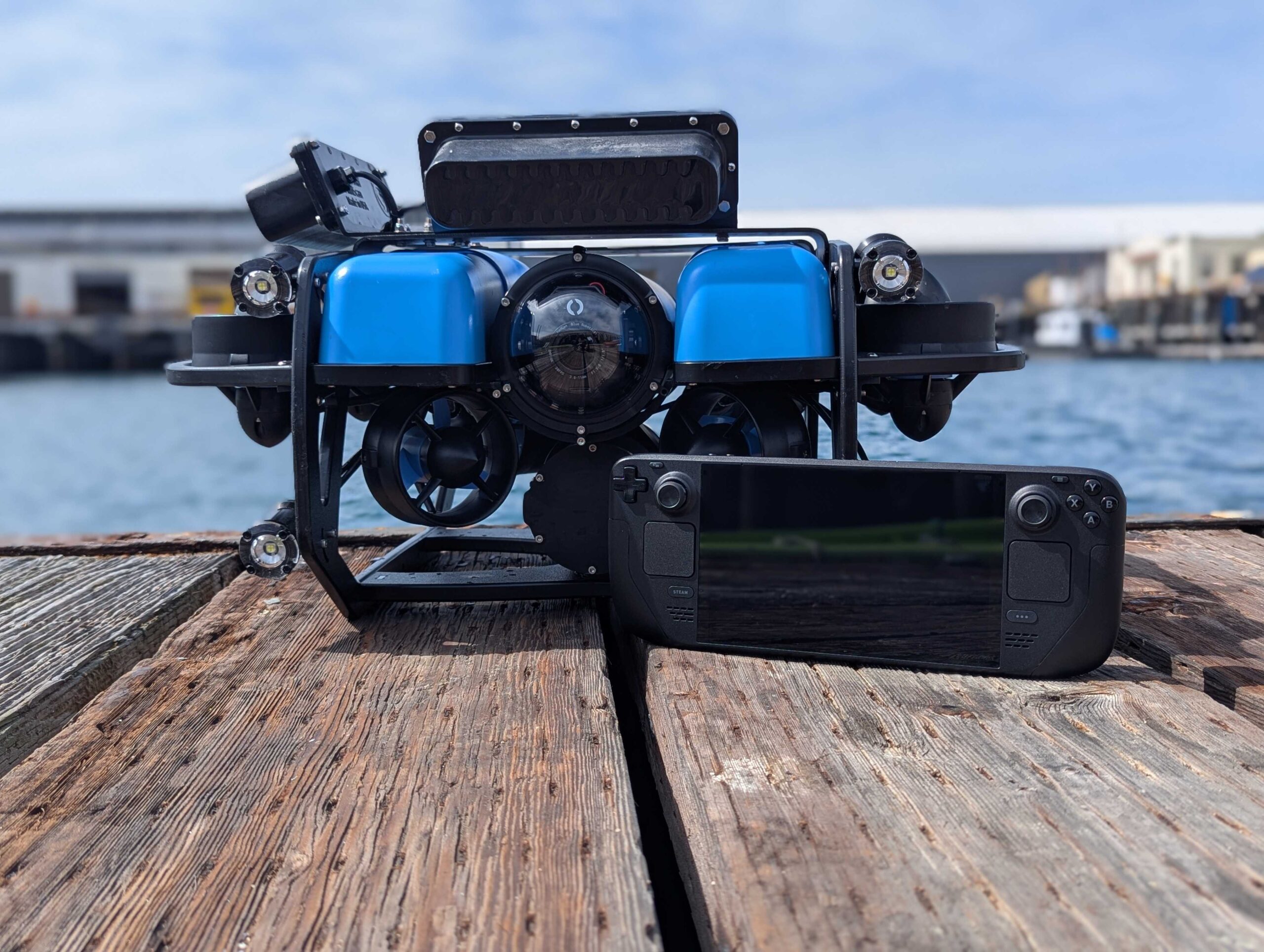
Yoleeth, CC BY-SA 4.0, via Wikimedia Commons

A fishing drop fails differently from a pass that has to stay on one mark
The job decides which machine is the right tool. If the work is a look straight under a boat that you can hold still, Aqua-Vu’s own instructions match that job: stop, or creep, and place the camera with the cable. The picture moves when the boat moves and when your hand moves. You are the station-keeping. That is enough for a short look under a stopped boat. It is a poor match for a survey pass that has to come back to the same fitting after the boat has drifted.
The article “What a hull-inspection ROV has to record” is about that second job: a mark you must find again, with a distance and a position, not a glance. A drop camera can show a picture. It cannot, on the pages opened here, hold itself at a depth and a heading while the pilot studies one spot. A BlueROV2 in depth-hold mode can hold depth and heading, which is closer to that job, and it is still not automatic position hold. The operating guide’s control list marks position hold as a mode that needs a positioning system. The buyer’s guide treats a Doppler velocity log as an add-on that “opens the door” to position holding. The base vehicle’s depth hold is not that add-on. If the box says the drone “holds position,” the page you need is the one that says whether that phrase means depth hold or a separate sensor.
Current and tether drag change the same comparison. The slim tether is sold because a thinner line creates less drag in a current. A drop camera has no motors to fight that drag; if the boat slides, the camera slides. A swimming vehicle can push back only while the thrusters have thrust left, and only in the mode the pilot has selected.
Runtime is where the two machines also refuse to sit on one scale. Aqua-Vu’s FAQ gives battery examples by model: up to 8 hours of continuous use for the Micro Revolution 5.0 HD, and up to 10 hours on a charge for the AV822 HD, with life that varies with temperature, brightness, and recording. Those are fishing-camera hours on a system that is not driving six thrusters. They are not a BlueROV2 runtime.
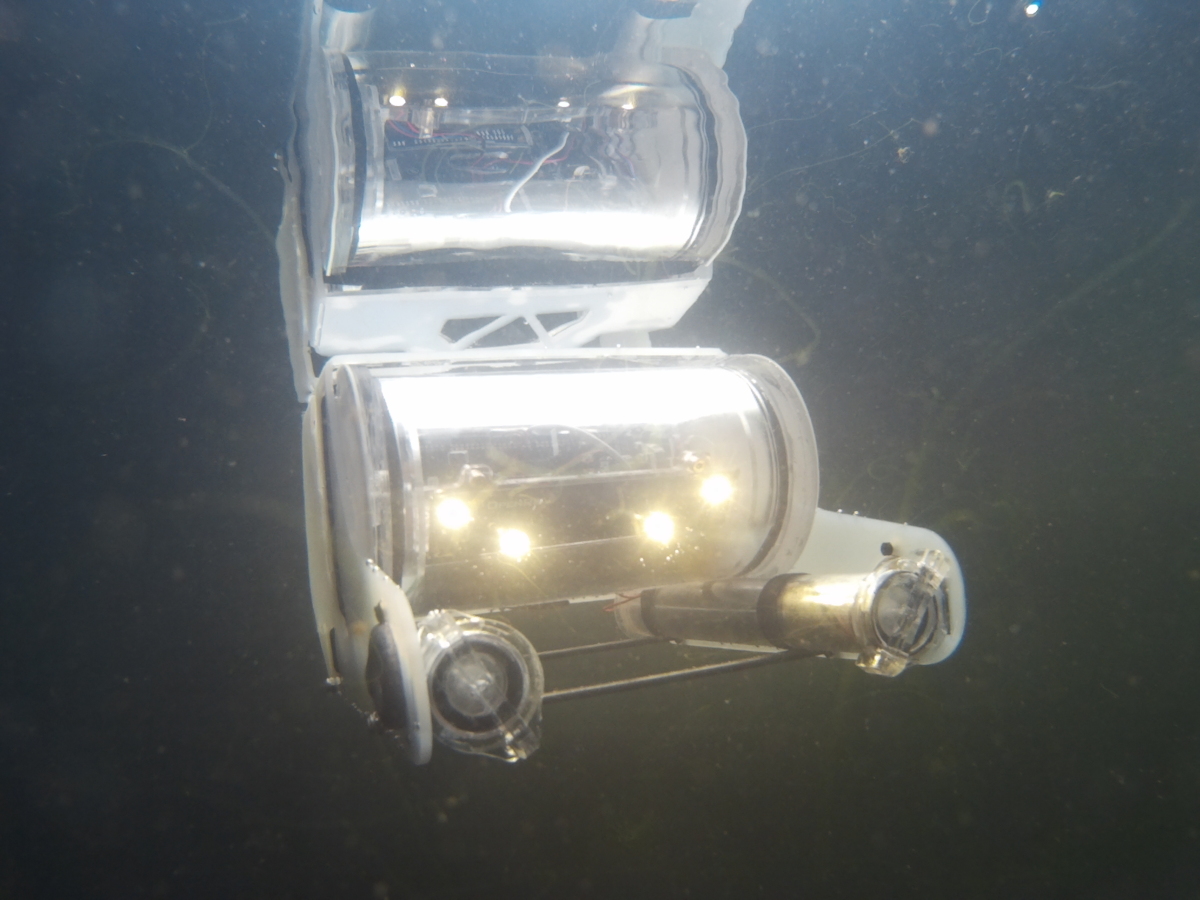
Xeopesca, CC BY-SA 3.0, via Wikimedia Commons

The pages to open, and the lines that do not match
Open the maker’s current page and write down the date. These were the pages opened on September 29, 2026.
On the BlueROV2 product page, read the vehicle depth and the component table together. The vehicle line is 100 meters with acrylic tubes and 300 meters with aluminum tubes. In the same table the electronics tube is listed at 100 meters in acrylic and 1,000 meters in aluminum; the battery tube at 150 meters acrylic and 1,000 meters aluminum; the depth sensor, thrusters, and foam at 300 meters; the dome and lights at 500 meters; and the tether at 1,000 meters. The vehicle does not inherit the largest of those numbers. The watertight-enclosure guide states the rule: the lowest-rated component sets the rating for the assembly.
Also compare the meters, not the feet. The product page prints 100 meters as 330 feet and 300 meters as 985 feet. The buyer’s guide prints 100 meters as 328 feet and 300 meters as 984 feet. The meter ratings agree. The foot conversions do not.
Then read the battery lines as a pair. The product table attaches about two hours of normal use and about four hours of light use to a Blue Robotics 15.6Ah battery, and it says a pack can be swapped in about 30 seconds. The buyer’s guide, opened the same day, recommends a 14.8 volt, 18Ah lithium-ion pack as the highest capacity and longest runtime, and a 14.8 volt, 10Ah pack as the smaller travel option. That guide does not publish those hours or define normal use or light use. Until a page says what was on, what the current was, and which battery was fitted, those hours are not a number for another brand’s column.
There is a third power case on the buyer’s guide: a surface power supply from Outland Technology sends power down its own tether from a 100 to 240 volt source on deck and is described as continuous runtime, with no onboard battery.
On the Aqua-Vu side, open both the FAQ and the technology page. The FAQ’s waterproof range for cameras and cables is 60 to 125 feet, depending on the model. The technology page says the cable system is depth-rated up to 150 feet. Those sentences cannot all be the depth of one camera you are about to buy. The check is the product line for the exact model. The FAQ also separates the screen’s IP67 rain rating from the camera’s depth.
One more line belongs in the notes. The watertight-enclosure user guide, and footnote 2 on the May 2026 enclosure datasheet, limit cast-acrylic depth ratings to short-term submersions of less than two weeks; for longer submersion they say to use aluminum. The product page ships a hand vacuum pump so enclosures can be checked for a seal. That test is not a substitute for the depth rating.
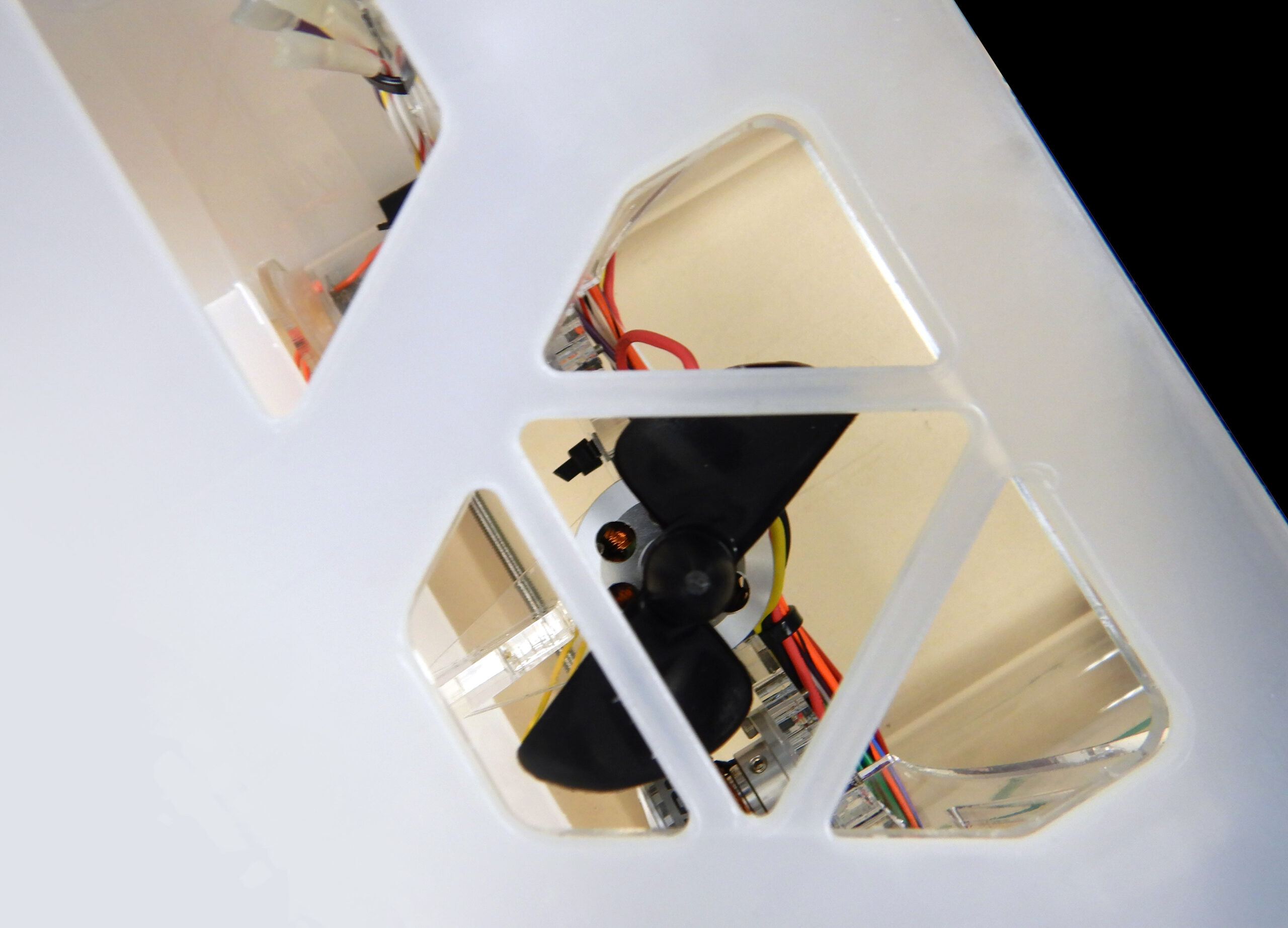
Lamiot, CC BY-SA 4.0, via Wikimedia Commons

The choice before you pay or before you launch
Write three lines. If any line is blank, you do not yet have a comparison.
The first line is the depth of the whole vehicle, not the deepest part in the table. For the BlueROV2 configurations opened here, that is 100 meters in acrylic or 300 meters in aluminum, and the acrylic figure is the short-term rating in the enclosure guide. For an Aqua-Vu, it is the depth of the model in front of you. If one page says up to 150 feet and the FAQ says 60 to 125 feet depending on the model, the model page wins.
The second line is runtime, but only with the battery size and the test. If the page says “up to” and then names temperature, brightness, or recording, keep that caveat. If the page says “normal” and “light” and does not say what those words include, write “test not stated” and stop. Do not copy the BlueROV2 table’s two hours and four hours onto the 18Ah pack. Do not copy an 8-hour or 10-hour fishing-camera figure onto a six-thruster vehicle.
The third line is what “hold” means. Depth hold, on the BlueROV2 operating guide, holds depth and heading. Position hold is marked as needing a positioning system. A drop camera holds where your hand and the boat hold it, which the FAQ limits to a stopped or slow boat. The article “How to estimate tether length before the vehicle leaves the boat” is the next decision for the swimming vehicle: the buyer’s guide already says you need more tether than the depth, for the horizontal run, the drift, and slack. A tether sold at the same number as the rated depth is the short one.
Choose the drop camera when the boat can stay put and the picture only has to hang under that boat. Choose the swimming vehicle when the camera has to stay at a depth you set, and budget for the tether, the battery the page specifies, and a positioning sensor if the job needs the vehicle over one point on the bottom. Neither choice is a promise about fish.
The 1,000-meter tube is not a 1,000-meter vehicle
The single fact that sorts a BlueROV2 box is on the product page’s component table, read against the vehicle line. Aluminum enclosure tubes are listed at 1,000 meters. The aluminum vehicle is rated to 300 meters. The parts that sit at 300 meters on that same table are the thrusters, the buoyancy foam, and the Bar30 depth sensor. The dome and the lights are listed higher, at 500 meters, and they still do not raise the vehicle to 500 meters. The guide’s rule is why: the lowest-rated component sets the assembly. On the acrylic configuration the electronics tube is listed at 100 meters and the battery tube at 150 meters, and the vehicle rating for acrylic is 100 meters, the lower of those two.
The May 2026 enclosure datasheet shows that acrylic is not even one rating inside a single tube diameter. For the 4-inch series, a cast-acrylic tube 200 millimeters long is listed at 140 meters, a 300 millimeter tube at 100 meters, and a 400 millimeter tube at 60 meters. Footnote 2 repeats the time limit: those acrylic ratings apply only to short-term submersions of less than two weeks. The 1,000-meter aluminum figure is a tube. It is not the depth the product page gives the vehicle.
The mistake that wrecks the comparison
The harmful move is to buy, or to dive, on the biggest depth number anywhere on the page and to ignore the test the maker did not write. On these Blue Robotics pages that mistake picks 1,000 meters off an aluminum tube, or it treats depth hold as if the vehicle will stay over one spot without the positioning system the operating guide requires. On the Aqua-Vu pages it picks “up to 150 feet” when the FAQ still says the rating depends on the model and runs from 60 to 125 feet. Paired with that, people copy a runtime onto a battery or a driving style the sentence never named. If the test conditions are missing, the runtime is not a spec yet. Leave it off the sheet.
Read next: What an ROV depth rating and a runtime claim are measuring. How to estimate tether length before the vehicle leaves the boat.