In murky water an underwater camera only shows what light and water clarity allow at short range. A clear-pool demo and a digital zoom that enlarges the display do not prove the same camera can identify an object in a harbor or a lake. When the water will not pass a usable picture of the object you must identify, the camera is the wrong primary tool—that is when sonar belongs in the plan, as covered in When an underwater job needs sonar, a camera, or both.
Answer box
- Right for this job: Close visual identification once you are already near the target, with enough ambient or lamp light that the subject fills the real optical field of view (Aqua-Vu technology page and Blue Robotics camera/light pages, opened September 29, 2026).
- Wrong for this job: Treating depth rating, display zoom, or a pool clip as proof of harbor or lake identification range (BlueROV2 dome/depth table; Aqua-Vu HD10i Pro manual zoom behavior; CSIRO-style pool footage is not a harbor test).
- The number that decides it: The clarity of the water you will actually work in—not the camera’s pressure rating. NOAA materials describe Secchi depth as a visual gauge of natural-water clarity, with published transparency measurements spanning from under 1 m to more than 30 m depending on the water body.
- What the spec leaves out: Product pages list field of view, lumens, and enclosure depth; they do not state the turbidity of your harbor or lake on dive day.
- Check before you rely on it: Whether zoom is display/digital, whether sample video names a real water body and subject distance, and whether lights and optical field of view are stated on a maker page you can reopen.
- Last checked (September 29, 2026)

What the lamp, the dome, and the lens actually do
Murky water is a light problem before it is a brand problem. Particles and dissolved color scatter and absorb light, so the camera sensor receives a washed-out, short-range scene even when the housing is rated for deep pressure.
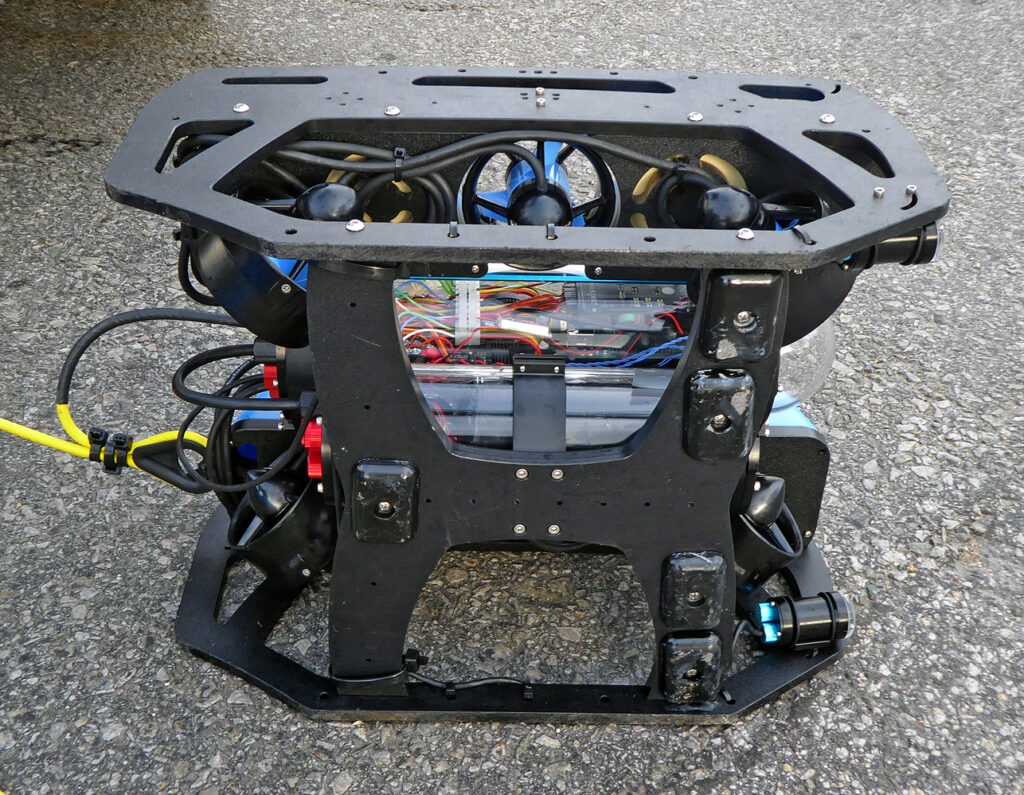
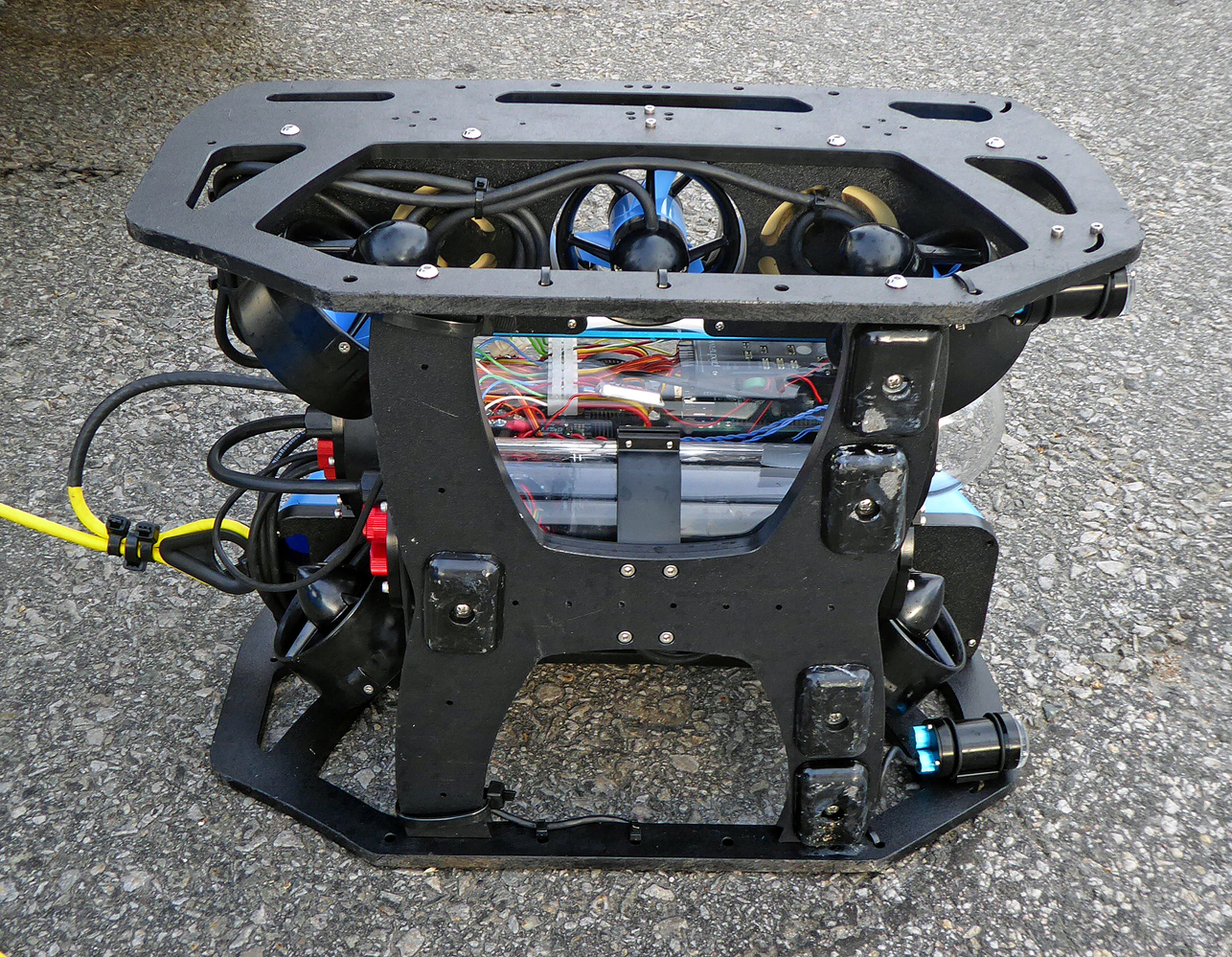
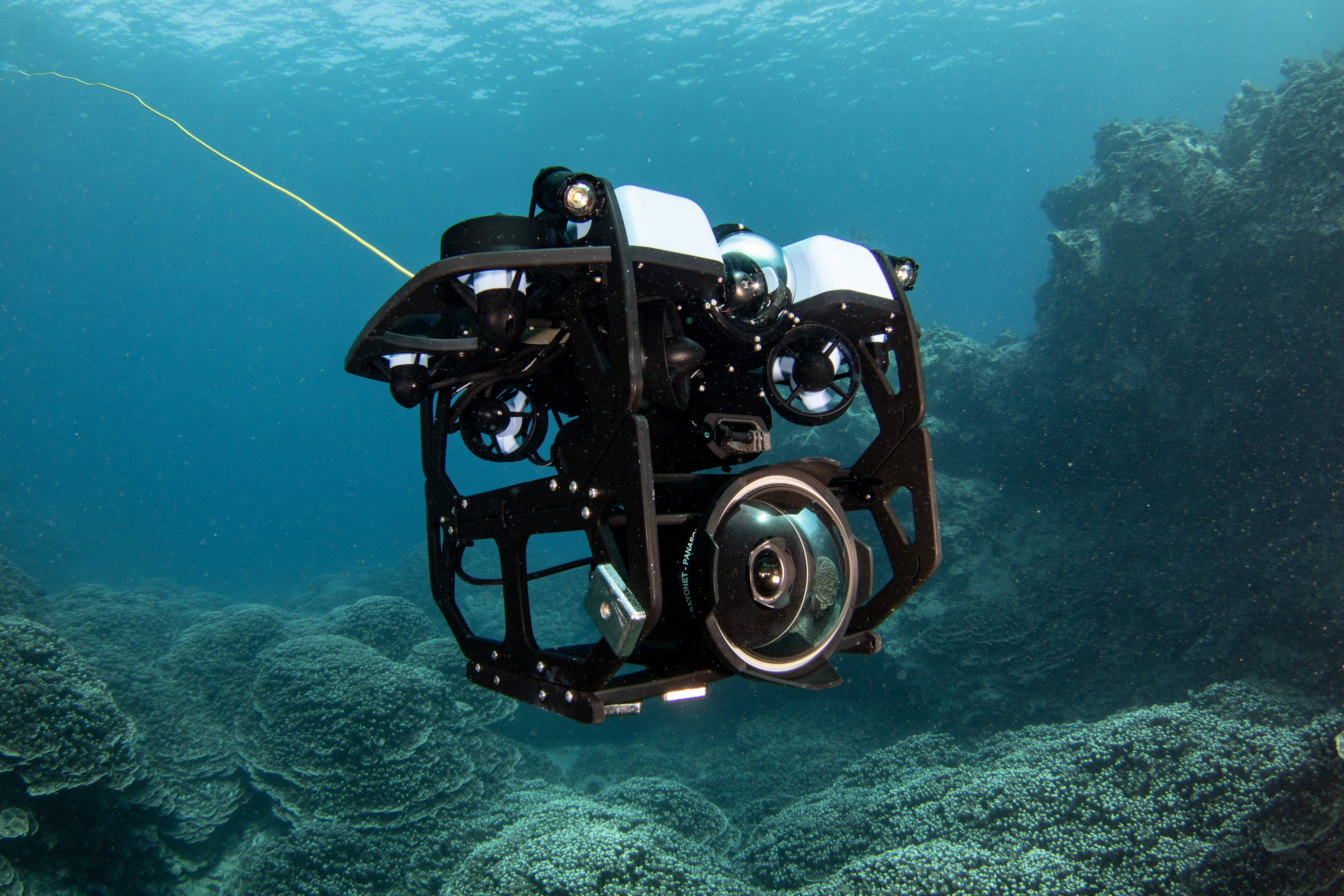
On a BlueROV2-class vehicle the picture path is concrete: a forward-facing low-light HD camera sits behind a dome on the electronics enclosure, and dimmable Lumen lights supply scene illumination. Blue Robotics’ BlueROV2 product page (opened September 29, 2026) states that the kit can use two or four Lumen lights for up to 6,000 lumens, and that the camera records 1080p at 30 frames per second. The separate Lumen Subsea Light page states a maximum brightness of 1,500 lumens per lamp, a 135-degree beam angle in water, and a 500 m pressure rating for the light itself. Those lumen and beam figures describe how much light you can put on a nearby subject; they are not a visibility distance through silt.
The dome is a pressure window. The BlueROV2 component table lists a “4″ Series Dome” with a 500 m figure beside it. Blue Robotics’ end-cap and dome catalog describes polycarbonate domes as optically clear ports for cameras and lights, with depth ratings attached to each size—again pressure ratings, not claims about how far you can see in dirty water. A dome that survives 500 m of water column still looks into whatever clarity that water happens to have.
The lens sets the optical field of view—the real angular patch of the scene that lands on the sensor. Aqua-Vu’s technology page states optics with up to a 135° field of view and multi-layer coated lenses for light transmission. Blue Robotics’ Low-Light HD USB Camera page states an 80° horizontal and 64° vertical field of view, with a minimum illumination of 0.01 lux. Those angles decide how much of a close object you can frame without cropping. They do not push the useful picture farther through murk.
Digital or display zoom is a separate mechanism. The Aqua-Vu HD10i Pro user manual (2021 PDF, reopened September 29, 2026) describes a zoom button that “zoom[s] in the display” and a TouchZoom feature that magnifies a quadrant of the screen, with a magnify symbol while zoom mode is active. That behavior enlarges pixels already captured; it does not add optical reach through turbid water. If the object is already lost in scatter at the lens, magnifying the monitor only magnifies blur.

How murky water changes the shot you can take
Compare this with the decision framing in When an underwater job needs sonar, a camera, or both: a camera needs light plus water clear enough to carry a recognizable image; sonar can detect structure when light fails. Depth rating on an enclosure answers “will the housing flood?” It does not answer “can I identify the object from here?”
Aqua-Vu’s own FAQ page is blunt about conditions. Systems “perform best during daylight or in clear water conditions with available light.” Some systems include infrared lighting, yet “underwater visibility at night or in extremely dark conditions will be limited.” For boat use, the same FAQ recommends deploying while the boat is stopped or moving slowly and positioning the camera by hand. Those statements describe when a live camera feed is usable—they are not marketing around infinite zoom.
Water clarity itself varies by place and day. NOAA’s Pacific Marine Environmental Laboratory technical memorandum on Secchi disk science (Preisendorfer, 1986; opened September 29, 2026) describes the classic method: a white disk about 30 cm across is lowered until it disappears from sight; that disappearance depth—the Secchi depth—is a visual gauge of the clarity of natural waters such as lakes and seas. A NOAA repository abstract for later Secchi research (Lee et al.; opened the same day) treats Secchi disk depth as a measure of water transparency and notes validation across oceanic, coastal, and lake waters with measured values ranging from under 1 m to more than 30 m. A few meters of visibility—or less than one meter in turbid coastal or lake water—caps how far any camera can usefully identify detail, regardless of lumen count on the lamp page.
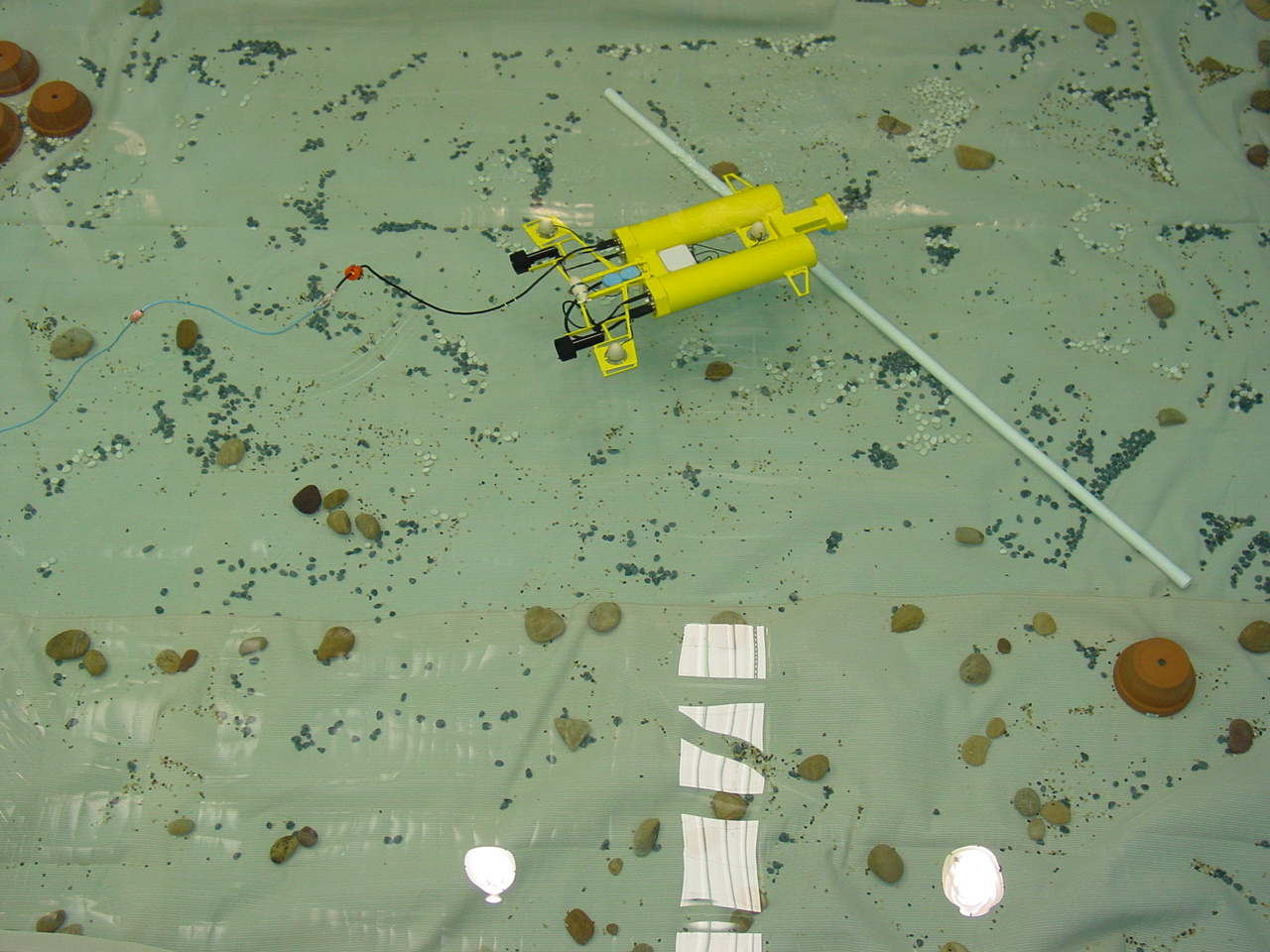
That is why a pool video is not a harbor or lake test. A pool is engineered for high clarity and controlled light. A harbor plume, a wind-stirred lake, or a muddy river mouth can drop transparency into the low-meter or sub-meter Secchi range. The same optical FOV and the same 1,500-lumen lamp then illuminate mostly backscatter. Product photos and clear-water clips omit the missing variable: the visibility of the water you will actually dive. No catalog still contains that number. For how depth and clarity jointly limit what a still can prove, read next How visibility and depth change what a picture can prove.

What to verify on the pages before you buy or dive
Open the maker pages yourself; the following were opened on September 29, 2026:
- https://aquavu.com/pages/technology — look for stated field of view (up to 135°) and optics claims, not a harbor identification distance.
- https://aquavu.com/pages/faqs — night/IR limits, daylight preference, and boat-stopped deployment guidance.
- Aqua-Vu HD10i Pro Manual (2021 PDF) — zoom and TouchZoom described as display magnification, not optical zoom.
- https://bluerobotics.com/store/rov/bluerov2/ — Lumen light count/total lumens, camera resolution, and the 4″ Series Dome listed with a 500 m depth figure.
- https://bluerobotics.com/store/thrusters/lights/lumen-r2-rp/ — 1,500 lumens, 135° beam in water, 500 m pressure rating.
- https://bluerobotics.com/store/sensors-sonars-cameras/cameras/cam-usb-low-light/ — 80°×64° field of view and low-light sensor figures.
- NOAA PMEL Secchi disk memorandum (Preisendorfer) and NOAA repository record for Lee et al. on Secchi depth — definitions and the <1 m to >30 m transparency span.
A useful field recording names a subject, a working distance, and a way to return to the same place. A catalog photo has none of those. The same skepticism applies when you compare whole vehicles: see How to compare two underwater drones without trusting the box.
The decision before the dive or the purchase
If the water is too dirty for the camera to identify the object you care about, plan detection with sonar and keep the camera for a close pass once you are near—or move closer until the object fills the optical field of view without display zoom. Buy lights and a dome because you need illumination and a pressure window, not because a lumen number or a 500 m dome rating promises harbor clarity. Do not promise yourself a catch from a product still. Do not enter restricted structures to “get a better look.”
One sourced number to keep
Blue Robotics’ Lumen Subsea Light page states a maximum brightness of 1,500 lumens and a 135-degree beam angle in water (opened September 29, 2026). That is a lamp output and beam width for lighting a nearby scene—not an optical zoom ratio and not a stated identification distance through murk.
The harmful mistake
Treating a clear-pool clip or a product photo as proof that the same camera can identify an object in a harbor or lake—or using display zoom as if it added optical reach through dirty water—sets the wrong expectation. The housing may survive the depth; the picture still ends where the water stops passing light.