A deep-rated vehicle can survive a depth its camera still cannot see across. The picture proves only what was close enough, lit enough, and clear enough to identify. It stops being proof when the water hides the object, which is when you add light, move closer, or use sonar instead of trusting the depth number or a pool clip.
Quick answer box
Right for this job: Separating a vehicle’s pressure survival depth from the distance at which a still or video frame can identify an object in the water in front of the lens.
Wrong for this job: Treating a clear-pool demonstration, a catalog clip, or a depth rating on a store page as proof that the same camera will identify objects in a harbor or a lake.
The number that decides it: Not applicable as a single meter figure on the vehicle page. Identification distance is the visibility of that water, which the depth rating does not contain. USGS defines water clarity as how “see through” the water is and measures it with tools such as a Secchi disc; those measures are about light through water, not about how deep a housing can go.
What the spec leaves out: On the BlueROV2 store page opened September 29, 2026, the maximum rated depth is 100 m with acrylic tubes and 300 m with aluminum tubes. That same page does not state an identification range in a named harbor or lake. Component depth ratings for the dome and Lumen lights are pressure survival figures, not visibility distances.
Check before you rely on it: Open the vehicle specifications for rated depth and for any line that claims identification distance in named water. On any recording, require subject, distance, and a way to find the same place again. If distance is missing, the picture does not prove the object was identified at the rated depth.
Last checked (September 29, 2026): Blue Robotics BlueROV2 store page; USGS water-clarity and turbidity education pages; Aqua-Vu FAQs (night and extreme dark); Blue Robotics underwater sonars guide (imaging sonar in low-visibility water).
What the housing and the camera are doing
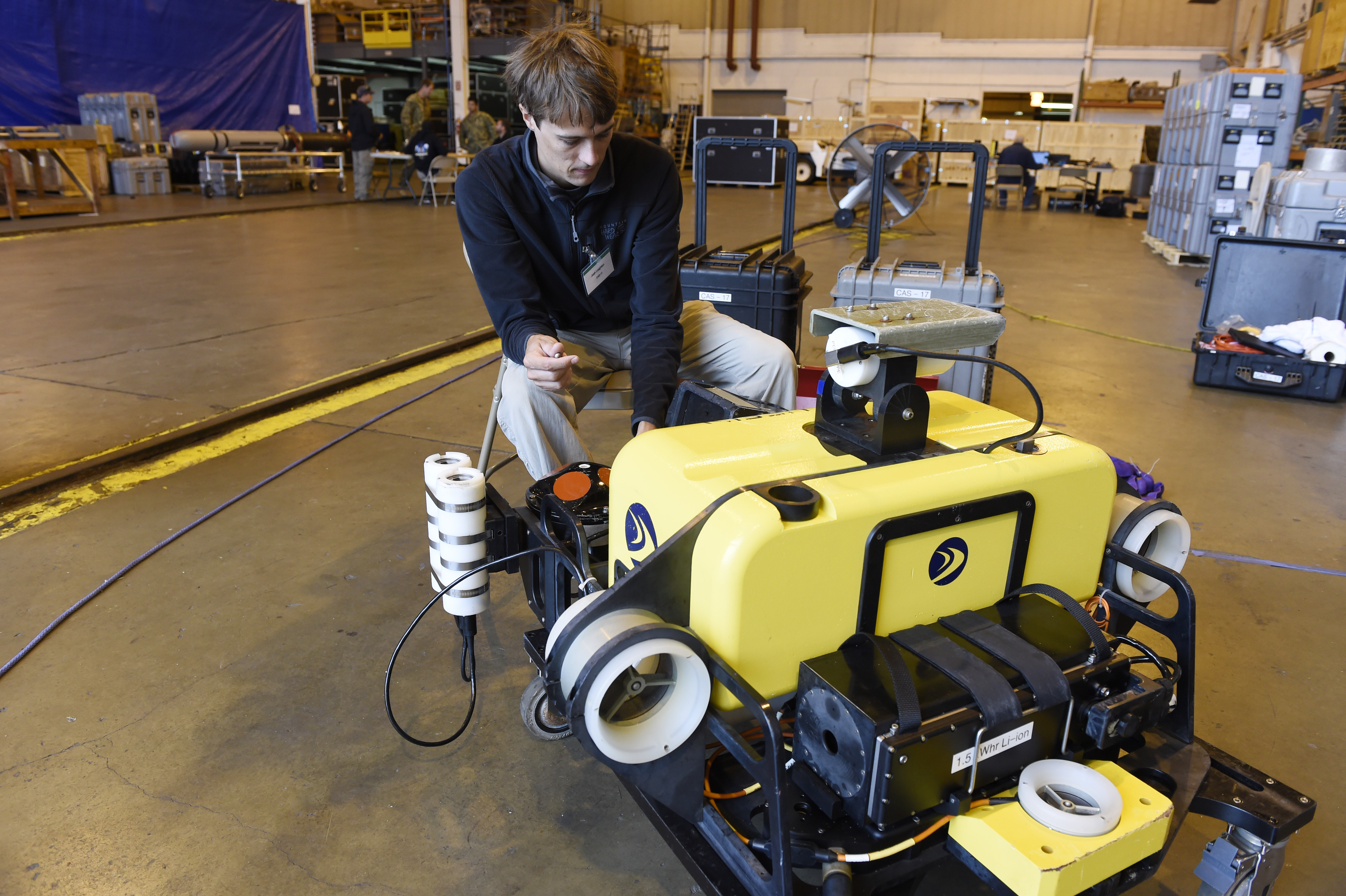
An underwater vehicle’s electronics live inside a watertight tube. On the BlueROV2, that tube is a Blue Robotics 4-inch series watertight enclosure, closed at the front with a series dome so the forward camera can look out. The tube and dome are pressure parts. Their job is to keep water out at depth. The lens and sensor behind the dome are optical parts. Their job is to collect light that has already traveled through the water between the subject and the glass.
Blue Robotics states that acrylic enclosures are rated to 100 meters and aluminum enclosures to 300 meters. The component depth-rating table on the same page lists the 4-inch series dome at 500 meters and the Lumen lights at 500 meters. Those higher component numbers do not raise the vehicle’s rated depth above 100 or 300 meters. They also do not tell you how far the camera can identify a bolt, a crack, or a lost tool. A dome depth rating is pressure survival. Visibility is how far the picture can identify an object. They are different numbers, written for different failure modes.
The same store page describes a forward-facing low-light camera inside the electronics enclosure, with a tilt mechanism, and optional dimmable Lumen lights—1500 lumens each with dimming control, up to 6000 lumens when four lights are fitted. Lumens are a real control for dark subjects that sit close enough for light to reach them and return. Lumens are not a harbor or lake visibility distance. No line on that page converts 1500 or 6000 lumens into meters of identification range in named water.
USGS puts the optical side in plain language. Water clarity is a measurement of how “see through” water is. Turbidity is the relative clarity of a liquid: how much light is scattered by clay, silt, organic matter, algae, and similar material when a light shines through a sample. A Secchi disc is a simple field tool: a weighted black-and-white disk lowered until it can no longer be seen, with the depth of disappearance recorded. That tradition measures light through water. It does not measure how many atmospheres a polycarbonate dome can hold.
So when a pilot reads “100 m” or “300 m” next to a camera still, two claims are easy to confuse. One claim is mechanical: the enclosure was rated to survive that depth. The other claim is evidentiary: the frame identifies a named object at a stated standoff in that water. Only the second claim is what a picture can prove. The first claim belongs to the housing test and the vehicle rating. Mixing them turns a survival number into fake optical proof.
How the proof fails
Proof fails in three common ways, and they are easy to spot once you name them.
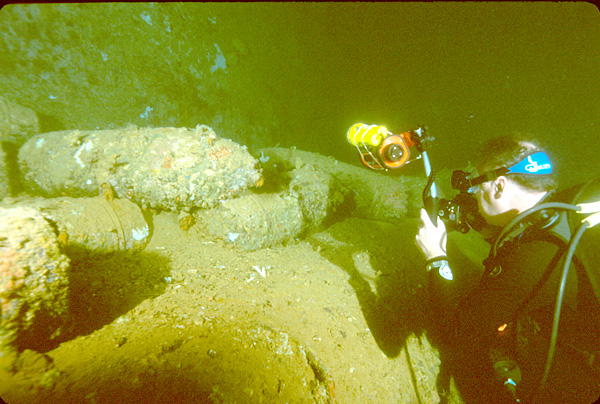
First, the water in the demonstration is the wrong water. A pool clip is clear by design. A harbor after runoff, a lake with plankton bloom, or a river mouth after rain is a different optical path. USGS notes that muddy water is harder to see through and that turbidity rises when particles wash in or when flow stirs the bed. That is not a product insult; it is how water works. Clear-pool footage does not transfer to harbor or lake performance. Staff writers should refuse that transfer even when the same vehicle model appears in both places.
Second, the depth rating is used as if it were an identification range. The BlueROV2 page states vehicle depth and component depth. It does not state how far the camera identifies objects in a named water body. If the rating is 100 m or 300 m and the still shows a crisp object, the still still needs subject, distance, and a place you can return to. Without those, the frame proves a subject was lit and clear enough at some unknown standoff—not that identification works at rated depth.
Third, light or resolution is treated as a cure for turbidity. Adding light helps when the object is close but dark. Aqua-Vu’s public FAQ, opened the same day for a non-ROV underwater camera line, states that systems perform best in daylight or clear water with available light, and that underwater visibility at night or in extremely dark conditions will be limited even when some systems include infrared lighting. That line is about darkness and available light, not a fishing sales pitch. It still teaches the same limit: hardware that adds photons does not erase water that will not pass a picture.
This article is about what a picture can prove. The buying version of the murky-water problem is covered separately in How to choose an underwater camera when the water is murky. The switch when light will not make a picture is covered in When an underwater job needs sonar, a camera, or both. Read those next for shopping criteria and for a fuller tool split. Do not expect this piece to repeat their whole arguments.
Blue Robotics’ own sonar guide, opened September 29, 2026, states that scanning and multibeam imaging sonars on ROVs are used in low-visibility water as a navigational aid and for object detection. Sound returns when light does not. That is why sonar belongs in the decision when the camera cannot identify the object. A sound picture still does not confirm every fine defect a close visual pass can. Do not claim sonar replaces that pass. Use it to find, approach, or map when the optical frame has already failed as proof.
What the reader can check
Check the manufacturer page you actually opened, not a memory of a brochure.
On September 29, 2026, this article opened https://bluerobotics.com/store/rov/bluerov2/. On that page, confirm the vehicle depth: 100 m with acrylic tubes, 300 m with aluminum tubes. Confirm the component table: 4-inch series dome at 500 m, Lumen lights at 500 m. Confirm lights: dimmable, 1500 lumens each, up to 6000 lumens with four lights. Confirm what is absent: no identification range in a named harbor or lake, no line that equates lumens to visibility distance in field water. The absence is the point. Rated depth is printed. Identification distance is not.
On the same date, this article opened USGS water-clarity education material at https://www.usgs.gov/youth-and-education-in-science/find-a-feature-water-clarity and the USGS Water Science School turbidity page at https://www.usgs.gov/special-topics/water-science-school/science/turbidity-and-water. Use those pages for the definitions of clarity, Secchi observation, and turbidity as scattered light. Do not pull a harbor or lake identification distance from the vehicle depth rating. If a government page you open does not state a figure for your site, say the identification distance is the visibility of that water, which the depth rating does not contain, and leave the meter number blank.
Also opened September 29, 2026: https://aquavu.com/pages/faqs for the night and extreme-dark limit even with infrared, and https://bluerobotics.com/learn/a-smooth-operators-guide-to-underwater-sonars-and-acoustic-devices/ for imaging sonar use in low-visibility water. Neither page is a license to invent a sonar range for this article. If a range is not stated for your job, do not write one.
On the recording itself, require three fields before you treat the frame as proof: what the subject is, how far the camera was from it, and how a second crew could find the same place again. If distance is missing, the picture does not prove the object was identified at the rated depth. A caption that says “100 m rated vehicle” next to a close object is a housing claim next to an optical claim. Keep them separate in the log.
The decision: add light, move closer, or switch to sonar
Start with what you can see on the live feed, not with the depth number on the invoice.
Add light when the manufacturer page shows dimmable lights on the vehicle and the object is already close but dark. On the BlueROV2 page, dimmable Lumen lights are a listed option, with 1500 lumens each and a four-light ceiling of 6000 lumens, and the kit notes recommend a four-light setup for poor lighting or night work. That is a control for darkness at short range. It is not permission to treat lumens as a visibility distance in a harbor. If the water between you and the object is already scattering the return, more light can also brighten the haze. The check is the feed: does the subject become identifiable, or does the water simply glow?
Move closer when the water will not pass a picture at the current distance. USGS’s clarity and turbidity pages describe why: suspended material scatters light. Closing the gap shortens the optical path. The flip distance is not printed on the vehicle depth rating. If no page states the standoff at which your camera identifies a class of object in that water, the check is the water in front of the lens, not the 100 m or 300 m line.
Switch to sonar when the camera still cannot identify the object after light and approach have been tried in good faith. Blue Robotics states that imaging sonars are used in low-visibility water for navigation and object detection, and that vehicle sonars can assist with locating underwater objects. That is enough to justify the tool switch without inventing a sonar range here. For the fuller camera-versus-sonar job split, use the sibling article named above. Remember the limit: sonar can return structure when the optical picture fails; it does not by itself finish every fine visual defect check that a close camera pass would.
Do not invent the distance at which each choice flips. If that distance is not stated on a page you opened for this water and this tool, the deciding evidence is what the current water allows the lens to prove.
One specific sourced fact
Blue Robotics’ BlueROV2 store page, opened September 29, 2026, rates the vehicle to 100 meters with acrylic tubes and 300 meters with aluminum tubes. On that same page, the specifications and component tables state depth ratings for tubes, dome, lights, and other parts. They do not state a visibility distance or an identification range in a named harbor or lake. Set those two observations next to each other: survival depth is printed; identification distance is not. USGS, on the same date, defines water clarity as how “see through” water is and describes Secchi-disk observation as the depth at which a black-and-white disk disappears from view. That definition belongs to the water, not to the housing rating.
The harmful mistake
The harmful mistake is using a clear-pool or catalog clip, or the 100 m or 300 m rating, as proof the camera can identify an object in a harbor or a lake. The pool has the wrong water. The rating answers pressure survival. Neither answers how far a picture can identify a subject in the water you actually work. When the feed cannot identify the object, add light if the subject is close but dark, move closer if the path is too long for that water, or switch to sonar when the optical picture has already stopped being proof—and keep a separate close visual pass for defects sonar cannot settle.