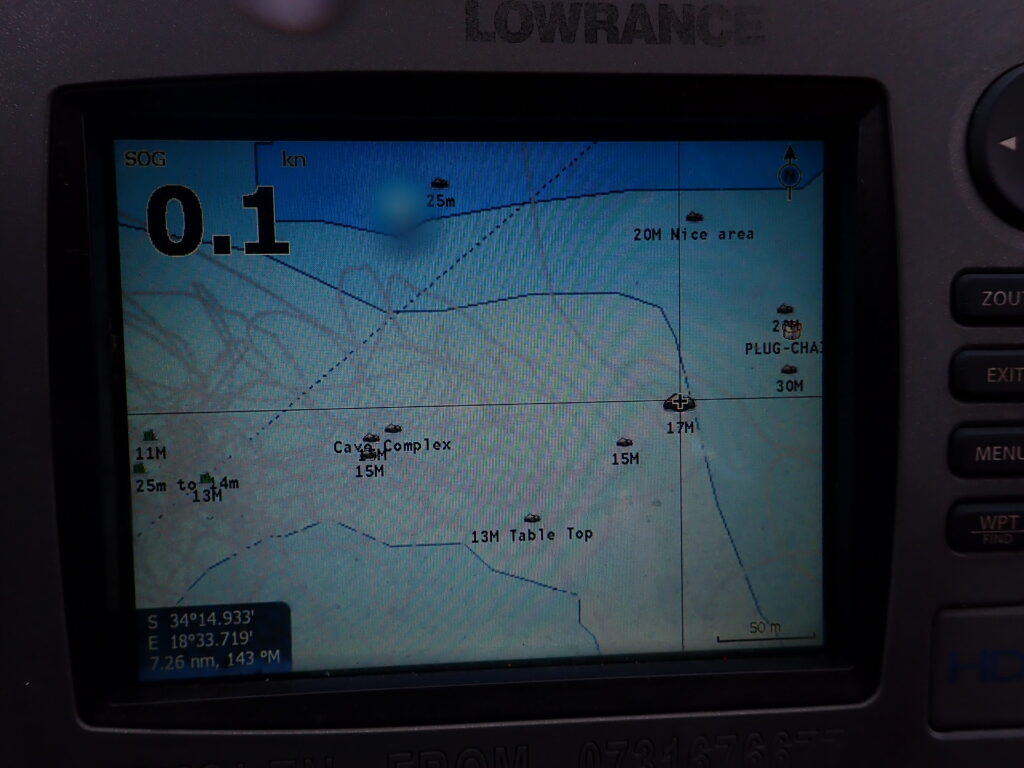
A fish finder marks a sonar return under the boat. A drop camera or swimming fishing ROV can show whether that return is fish, weed, or gear only if the lens reaches the mark while the water is clear enough to read the picture. It stops being the right tool when battery life, tether length, or the boat’s drift means the camera never arrives—and a live view never promises a catch.
Right for this job: Confirming what a fish-finder return looks like once a camera is on the mark in water clear enough to see the subject—opened Aqua-Vu FAQ and Technology pages, September 29, 2026.
Wrong for this job: Treating a sonar mark, fish-symbol overlay, or product species list as an identified fish or a guaranteed catch—Garmin Fishfinder 160C manual and NOAA Fisheries pages opened September 29, 2026.
The number that decides it: Whether the cable or tether is long enough for depth plus horizontal drift and slack; Aqua-Vu FAQ waterproof depths by model are 60–125 ft, while the Technology page states cable depth-rated up to 150 ft—pages disagree, so do not assume the larger figure (opened September 29, 2026). Blue Robotics states tether length is not operating depth (opened September 29, 2026).
What the spec leaves out: Aqua-Vu lists display battery hours that vary with temperature, brightness, and recording; those hours are not thruster runtime for a swimming ROV. Rated housing depth is not the distance at which you can identify a subject (Aqua-Vu FAQ; Blue Robotics buyer’s guide; opened September 29, 2026).
Check before you rely on it: Boat stopped or moving slowly with hand cable control (Aqua-Vu FAQ); enough free tether for drift (Blue Robotics); water clear enough to identify the subject; a way back to the same spot. If visibility fails, the camera is the wrong proof.
Last checked: September 29, 2026
What the sounder and the camera are actually doing
A boat fish finder works through a transducer that sends sound into the water and listens for echoes. Garmin’s Fishfinder 160C owner’s manual, opened September 29, 2026, describes those echoes as sonar returns: the bottom is typically the strongest continuous return; weaker returns can appear between surface clutter and the bottom as suspended targets. By default those targets show as arches. The same manual notes that arches are not always perfect, depending on boat speed, target orientation, and other conditions, and that an optional Fish Symbols mode can replace arches with fish-shaped icons. Those icons are a display choice. They still rest on acoustic returns. They do not turn the screen into a photograph of a named species.
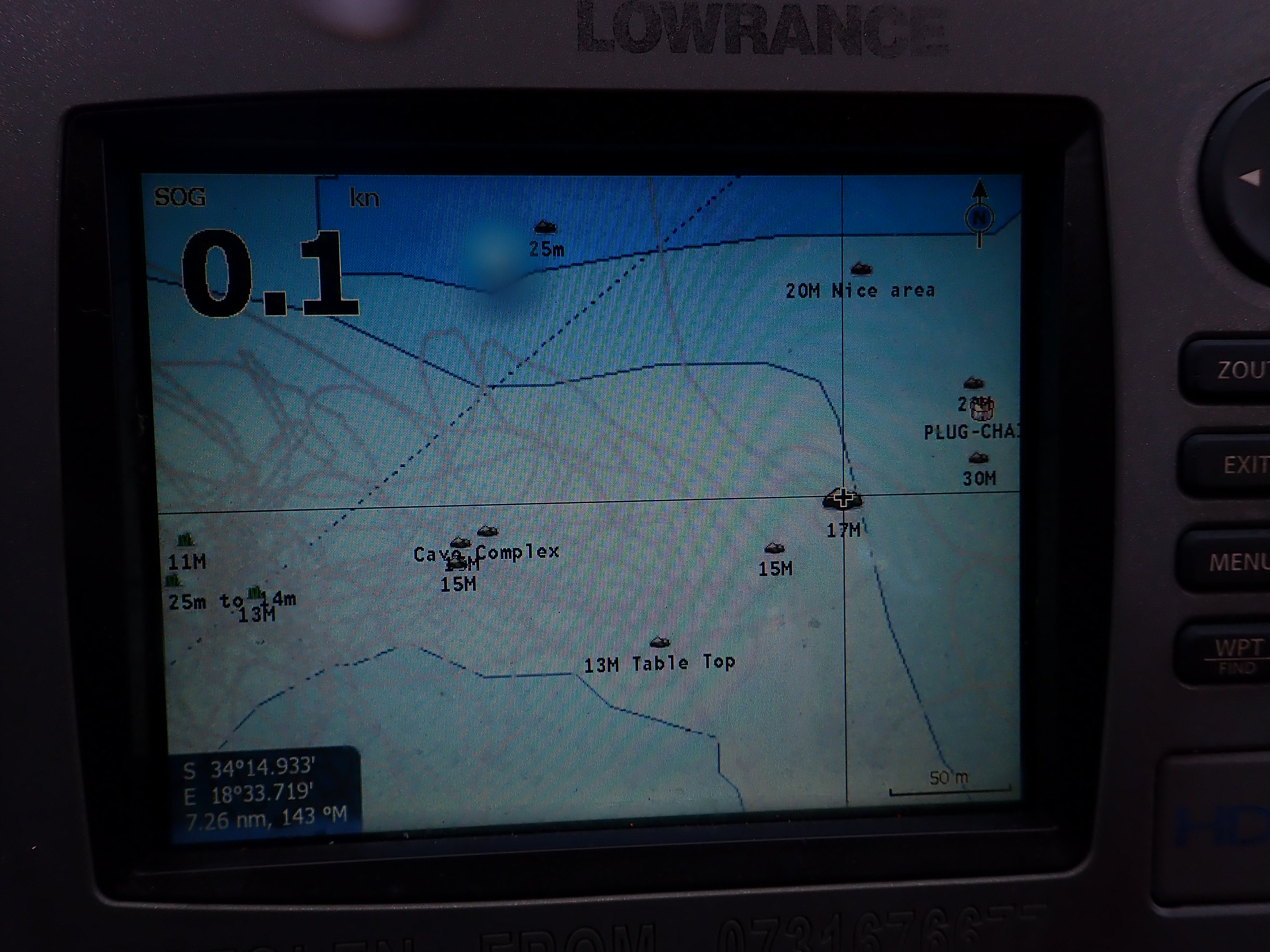
NOAA Fisheries makes the same distinction in survey language. On a page about acoustic fish surveys with uncrewed vehicles, scientist Alex De Robertis is quoted saying acoustic instruments basically see a swim bladder, not which fish that bladder belongs to (NOAA Fisheries feature story, opened September 29, 2026). A related NOAA West Coast page on acoustic hake survey methods explains that echo sounders emit pings, record backscatter, and display strength versus depth on an echogram; scientists still ground-truth marked regions—historically with nets—to identify what produced the echoes (opened September 29, 2026). Consumer fish finders are not research echo sounders, but the core idea transfers: a mark is a return. It is not, by itself, a species name.
The camera side of the pair is different hardware. An Aqua-Vu-style fishing system is built around a waterproof camera on a cable and a display that shows a live underwater view. The FAQ, opened September 29, 2026, states that Aqua-Vu systems provide that live view as you fish, that you manually deploy the camera and control the cable by hand, and that the best visibility comes with the boat stopped or moving slowly. Cameras and cables are waterproof to depths ranging from 60 to 125 feet depending on the model, per that FAQ. The separate Technology page, also opened September 29, 2026, claims cable systems depth-rated up to 150 feet and optics with up to a 135° field of view. Those two Aqua-Vu pages do not agree on the cable depth figure. Treat the disagreement as a warning: do not pick the larger marketing number when the FAQ’s model range is more conservative, and do not confuse a housing or cable waterproof rating with the optical distance at which you can tell fish from weed from lost gear.
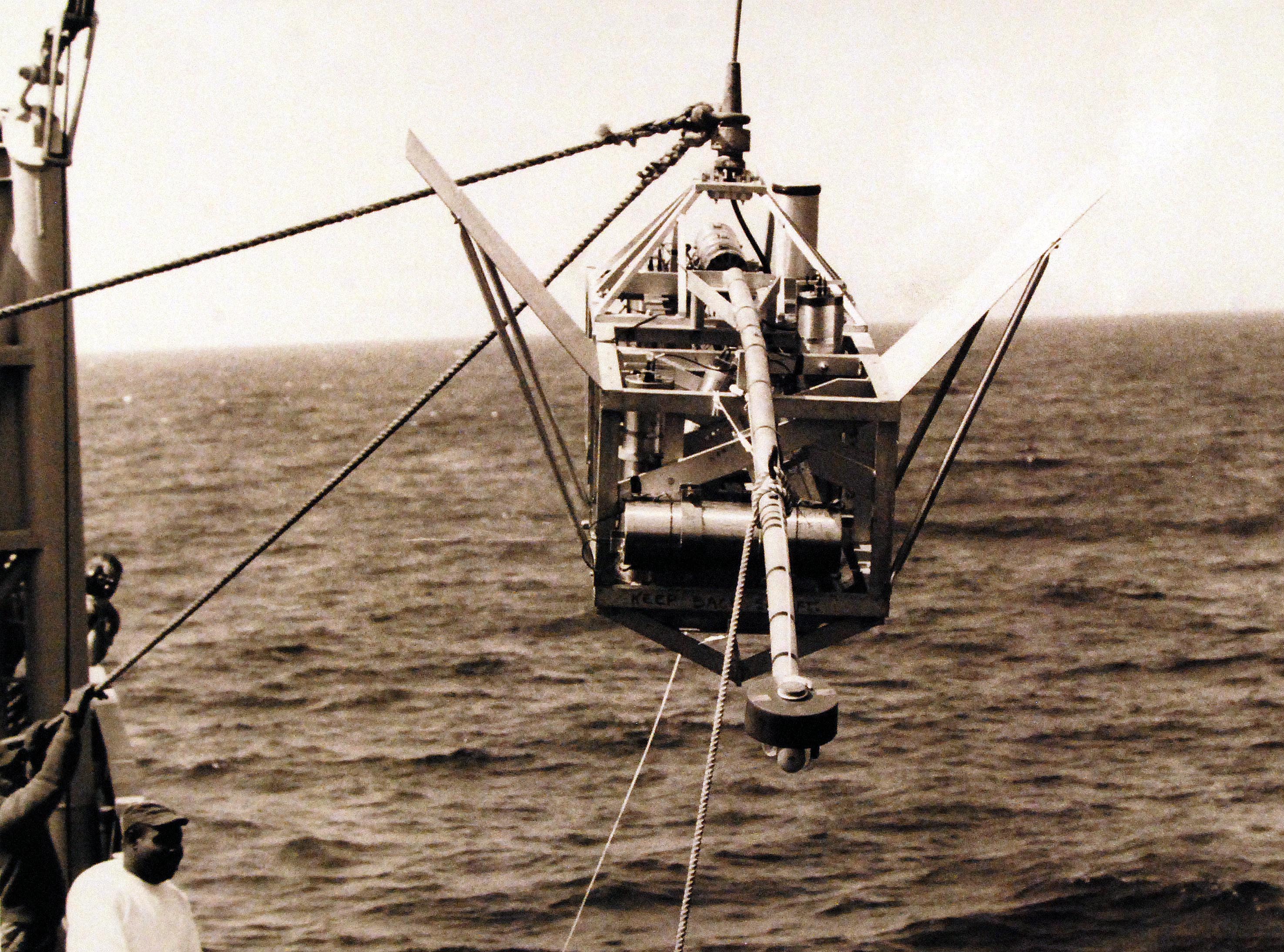
A swimming fishing ROV adds thrusters so the camera can move under its own power, but it still depends on a physical link and stored energy. Blue Robotics’ BlueROV2 buyer’s guide, opened only for tether facts on September 29, 2026, states that radio waves do not travel far through water, so a tether is required for communication, and that tether length does not directly equal maximum operating depth because you need extra line for horizontal travel, current drift, and slack to maneuver. That is the contrast that matters here: a hand-lowered Aqua-Vu has no thrusters—the boat and your hands place it—while a swimming ROV can steer toward a mark, yet both still fail if the cable runs out, the battery dies, or the boat drifts off the return before the lens arrives.
How this fails differently from an inspection job
Inspection work and fishing marks fail for related but not identical reasons. On a hull or structure, imaging sonar can find a candidate defect while a camera is asked to confirm fine detail that sound alone will not settle; that pairing is covered in When an underwater job needs sonar, a camera, or both. On a fishing mark, the sounder already found a candidate. The failure mode is misreading the candidate. The fish finder did not name the return. Weed edges, bait balls, thermoclines, and snags can all produce interesting marks. Garmin’s manual itself shows how easily the display can be told to draw fish symbols over suspended targets—an aid for scanning, not a biological ID.
A fish-finder screenshot is also not a hydrographic chart. It is a real-time or recent history of returns under one transducer track. How a seabed map is made, and why a fish-finder screenshot is not one, is a separate problem of survey control, coverage, and chart standards. This article does not build that map. Read that piece when your question is about mapping rather than identifying one mark.
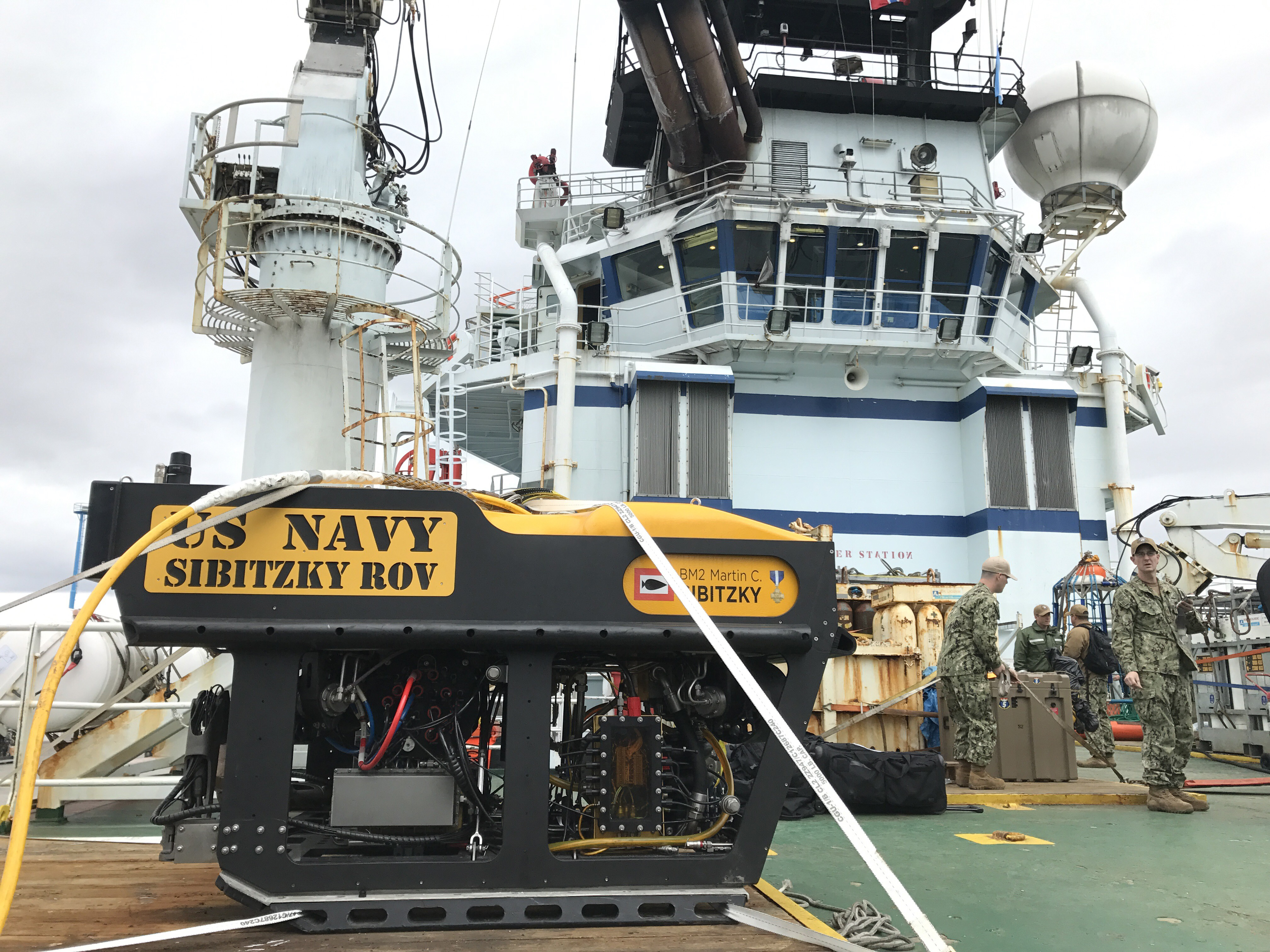
For the fishing pair, the practical split is simple. The transducer finds where to look. The camera identifies what is there only after it reaches that place with enough light and water clarity. If you skip the arrival step, you are still looking at a return—sometimes with a fish icon drawn on top of it.
What you can check on the pages that state it
These URLs were opened on September 29, 2026:
- https://static.garmin.com/pumac/FishFinder160C_OwnersManual.pdf — Garmin Fishfinder 160C owner’s manual: transducer echoes displayed as returns; suspended targets as arches by default; optional fish symbols as a graph setting, not a photograph.
- https://www.garmin.com/en-US/blog/marine/benefits-chirp-sonar-technology/ — Garmin CHIRP overview: returns interpreted onto the screen; scanning sonar described as nearly photographic images of structure and fish still produced by sonar, not by a lens.
- https://aquavu.com/pages/faqs — live underwater view; hand cable control; boat stopped or moving slowly; waterproof depths 60–125 ft by model; battery life varies with temperature, brightness, and recording (example model claims of up to 8 or 10 hours of continuous use are display-system hours, not ROV thruster runtime).
- https://aquavu.com/pages/technology — up to 135° field of view; cable depth-rated up to 150 ft (conflicts with the FAQ’s 60–125 ft model range; do not prefer the larger number).
- https://bluerobotics.com/learn/bluerov2-buyers-guide/ — tether required because radio does not travel far in water; tether length is not depth; allow extra for drift and slack.
- https://www.fisheries.noaa.gov/feature-story/detecting-fish-ocean-going-robots-complement-ship-based-surveys — acoustic instruments see a swim bladder, not the fish identity, without additional sampling.
- https://www.fisheries.noaa.gov/west-coast/science-data/acoustic-hake-survey-methods-west-coast — echograms show echo strength versus depth; marked regions are verified before species claims in survey work.
A useful camera clip for this job has three parts: a recognizable subject (fish, weed, or gear), a sense of distance so you know you were on the mark, and a navigational way back—GPS mark, landmark, or recorded position—so the observation can be repeated. A species list on a product page is marketing inventory, not that clip. Do not treat a seller’s fish roster as evidence that your next mark will match the list.
The decision before you lower the camera
Before the lens goes over the side, decide whether the boat can hold the geometry the camera needs. Aqua-Vu’s own FAQ guidance is a stopped or slow boat with hand control of the cable. If wind or current makes the boat slide, the transducer’s mark and the cable’s hanging point separate. Every foot of horizontal drift consumes cable that you thought was available for depth. If your cable is only as long as the depth number on a marketing line, it is already short once the boat moves. That is why Blue Robotics’ tether warning matters even for anglers comparing a drop camera to a small ROV: length on the spool is not the same as vertical reach under a drifting hull.
Battery planning has the same honesty requirement. Aqua-Vu states that actual battery life depends on temperature, brightness settings, and recording use, and it publishes example continuous-use figures for specific display models. It does not, on the pages opened here, publish a thruster-hour budget for a swimming fishing ROV under load. If a runtime test method is not stated for the vehicle you are using—lights on, thrusters working, water temperature noted—write “test not stated” in your own notes and do not invent minutes. Do not borrow Aqua-Vu display hours and call them ROV flight time.
Water clarity is the third gate. A camera that arrives on a cloudy mark still fails as proof if you cannot tell fish from weed from rope. When the water is too dirty to identify the subject, the camera is the wrong confirmation tool. How to choose an underwater camera when the water is murky is the place for that decision; this article does not repeat that turbidity trade space. Here the rule is only: if you cannot see enough to identify, you still have only the sonar mark.
One sourced fact that usually decides arrival
Blue Robotics states the deciding geometry in one sentence worth keeping on the console: tether length does not directly translate to maximum operating depth, because you always need more tether than your target depth to account for horizontal travel, current drift, and slack so the vehicle can maneuver. On a fishing boat the same arithmetic applies to a hand cable. Depth to the mark is only the vertical leg. Drift is the hypotenuse. If you lower a camera with a cable matched only to the sounder’s depth readout, the boat’s motion—not the fish—decides whether the picture ever forms.
The harmful mistake
The harmful mistake is treating the sonar mark as a fish you have already identified, or promising a catch because a camera or ROV is on the boat. A fish-symbol mode can make the error feel official. A live-view brochure can make the error feel modern. Neither changes the physics. NOAA’s survey language still separates acoustic detection from identity. Garmin’s own manual still describes arches and optional symbols as ways to show suspended targets, not as certificates of species. Aqua-Vu’s pages describe a live view under cable control from a slow or stopped boat, not a guarantee that every mark will be fish or that fish will take a lure.
Use the sounder to find the spot. Use the camera only when battery, tether, and drift allow the lens to arrive and the water is clear enough to read fish, weed, or gear. If any of those conditions fail, stay with the mark as a mark—and do not sell yourself a catch that the screen never earned.