A depth rating is the depth the housing—and the lowest-rated part in that assembly—is built to survive. A runtime claim is the minutes the battery is quoted for under a test the page must name. When the page never states that test, the hour count stops being a usable spec for planning a dive with lights, sonar, or current.

Quick decision box
- Right for this job: Matching your planned depth to the vehicle’s enclosure configuration (acrylic tubes 100 m / aluminum tubes 300 m on the BlueROV2 product page opened September 29, 2026), and treating any battery hours only as the maker’s quoted band for the battery size listed next to them.
- Wrong for this job: Treating a component tube rated to 1,000 m as the vehicle’s operating depth, or treating an undefined “normal use” hour count as the time you will get with lights, sonar, and current running.
- The number that decides it: Vehicle maximum rated depth—100 m with acrylic tubes or 300 m with aluminum tubes on the BlueROV2 store page (September 29, 2026)—and, for endurance, whether the page names the load test behind any minutes or hours.
- What the spec leaves out: The BlueROV2 battery line quotes “~2 hours (normal use)” and “~4 hours (light use)” for a 15.6Ah pack; those words are not defined on that page. No lights-on, sonar-on, or current-load minute figure appears there or on the buyer’s guide opened the same day.
- Check before you rely on it: Vehicle depth versus each component’s depth; battery capacity next to the hours; whether “normal” and “light” are defined; whether the page names a surface-power option separately from a battery quote.
- Last checked: September 29, 2026
What the tubes, thrusters, and pack are actually sized for
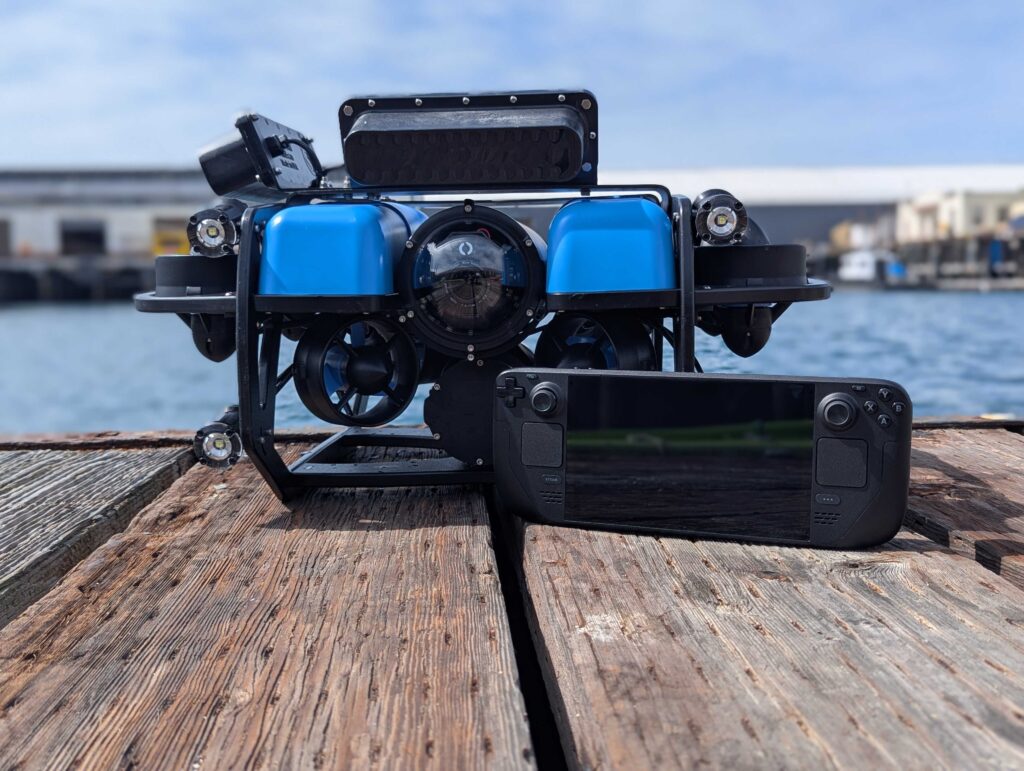
On the BlueROV2, pressure hits hard parts you can point to: a 4″-series watertight electronics enclosure tube, a smaller 3″-series battery enclosure tube, a forward dome, T200 thrusters, buoyancy foam, lights, and a Bar30 depth sensor. The store page rates the vehicle itself to 100 m with acrylic tubes and 300 m with aluminum tubes. That is a survival rating for the configured housing stack. It is not how far the camera can see, how long video stays sharp, or how far horizontal tether travel can take you.
The same page lists six thrusters—four vectored and two vertical—using T200 units. Thrusters move the vehicle; they do not raise depth above the enclosure configuration. The recommended onboard pack on that page and the buyer’s guide is a 14.8 V lithium-ion battery at 18 Ah, with a 14.8 V 10 Ah travel pack also listed on the buyer’s guide. The specifications table still ties its hour band to a “15.6Ah” battery line. Rated depth remains a housing number. Camera range and battery minutes are different instruments.
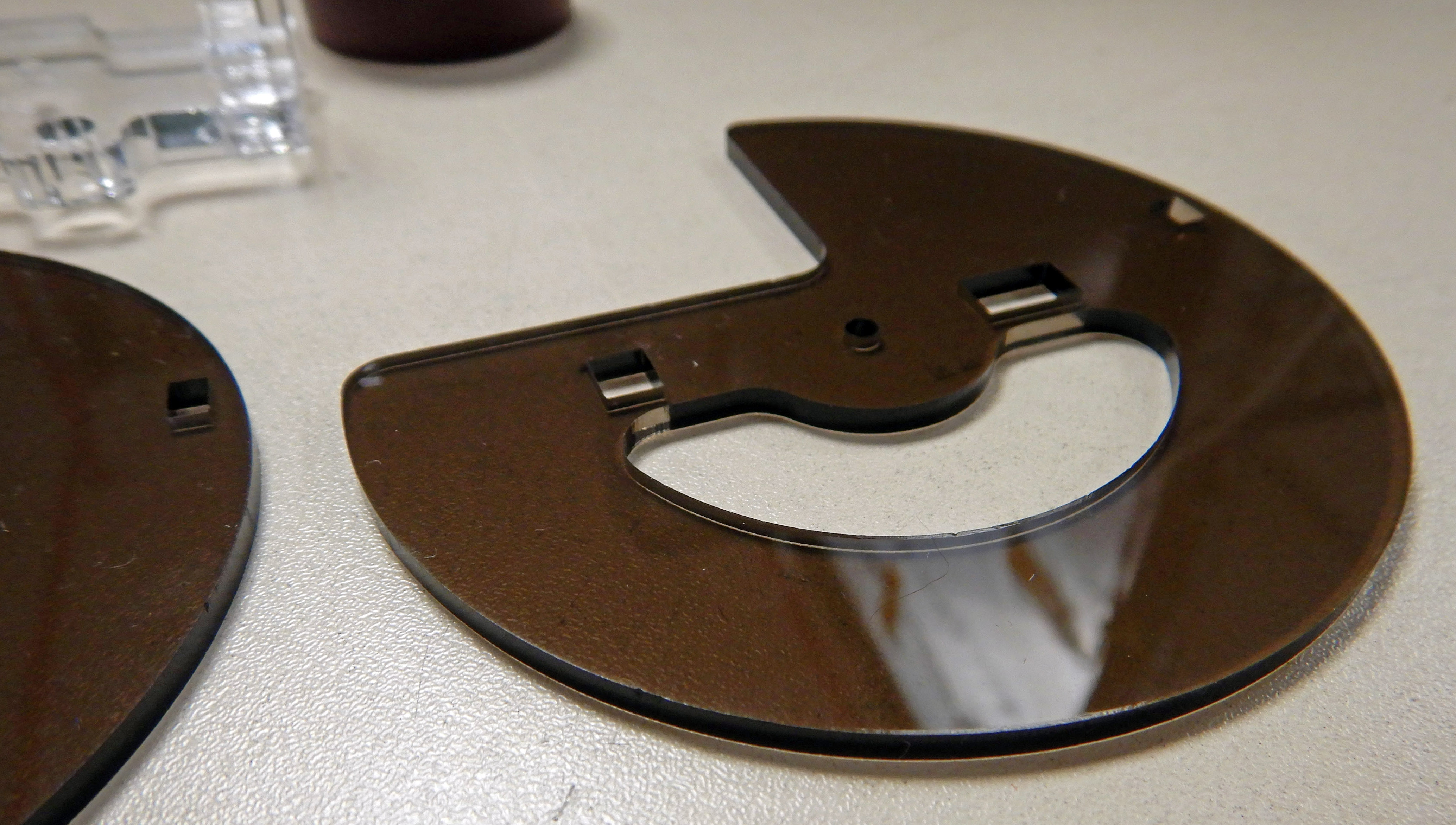

Blue Robotics’ watertight-enclosure assembly guide states that the lowest-rated component sets the rating for the whole assembly. Its May 2026 WTE datasheet adds that cast-acrylic depth ratings apply only to short-term submersions lasting less than two weeks; longer immersion should use aluminum. On that datasheet, a longer 4″ cast-acrylic tube of the same series is the weaker rating: 200 mm length at 140 m, 300 mm at 100 m, and 400 mm at 60 m. That length-versus-rating pattern is why you read the vehicle configuration and the component table together, not a single impressive tube number in isolation.
Why the same pack yields different minutes once the job hardens
A best-case runtime quote is the minutes or hours the maker assigns to a named battery under a load the page must describe. On the BlueROV2 product page opened September 29, 2026, that quote is about two hours for “normal use” and about four hours for “light use,” with batteries said to swap in about 30 seconds, all next to the 15.6Ah line. The page does not define those load words. The buyer’s guide opened the same day lists the current 18 Ah and 10 Ah packs and does not restate the two-hour or four-hour figures.
A dive with lights, sonar, and current is a different energy problem. The product page offers two- or four-light Lumen sets and optional sonars; the buyer’s guide notes that slim tether reduces drag in strong current and that tether length is not operating depth because horizontal travel, drift, and slack consume cable. The operating guide says excess tether adds drag, that low gain and near-neutral buoyancy stretch battery life, and that you should recover around 12.5 V and not discharge a 4S pack below 12.0 V. Those voltage notes are cutoffs, not mission minutes. The maker pages we opened do not state a lights-on, sonar-on, or current-load minute figure. The test for that harder job is missing, so this article does not invent a shorter number.
That gap is why a sibling piece, How runtime shrinks once the lights and sonar are on, exists as a separate instrument: accessories and load change endurance; they do not redefine depth. Do not treat the undefined “normal use” band as that sibling’s answer.
Surface power is a third case. The buyer’s guide describes the Outland Technology Power Supply (OTPS) as continuous runtime from a 100–240 VAC surface source over its own tether, with no onboard battery. That is not a battery runtime claim. Do not mix an OTPS note into the ~2 / ~4 hour battery band.
Pages to open before you trust the number
These URLs were opened on September 29, 2026 for this article:
- https://bluerobotics.com/store/rov/bluerov2/ — vehicle depth (100 m acrylic / 300 m aluminum; foot figures 330 ft / 985 ft), thruster layout, battery-life line with 15.6Ah, component depth table, lights and sonar options.
- https://bluerobotics.com/learn/bluerov2-buyers-guide/ — acrylic 100 m (328 ft) / aluminum 300 m (984 ft); 18 Ah and 10 Ah packs without restating the 2-hour / 4-hour band; tether lengths; OTPS continuous surface power; note that tether length is not operating depth.
- https://bluerobotics.com/learn/bluerov2-operation/ — Manual mode has no depth hold; Depth Hold holds depth until commanded; Position Hold needs a positioning system; excess tether adds drag; low gain and neutral buoyancy help battery life; recover near 12.5 V and stay above 12.0 V on a 4S pack.
- https://bluerobotics.com/learn/watertight-enclosure-wte-assembly-new/ — lowest-rated component sets the assembly rating; acrylic ratings for short-term submersion under two weeks.
- WTE datasheet Rev C.5 (May 2026) — same acrylic short-term footnote; 4″ acrylic tube ratings by length (140 m / 100 m / 60 m).
Look for three mismatches: vehicle depth versus a higher component depth, battery size next to the hours, and whether “normal” and “light” are defined. Meter figures on the product page and buyer’s guide agree at 100 m and 300 m; the foot conversions differ slightly (330 ft vs 328 ft acrylic; 985 ft vs 984 ft aluminum). Use the meters; treat the foot line as a conversion check, not a second rating.
What to decide before you dive or buy
If the page does not name the load test behind the hours, write “test not stated” and do not borrow hours from a different battery size, a forum, or a review. Do not invent a lights-and-sonar minute count. You may dim or shut lights on the return leg to save energy for recovery—that is an operator choice, not a published minute figure. Continuous operation without pack swaps means evaluating surface power (OTPS) as a different setup from the battery quote.
For depth, decide against the configuration you will fly: acrylic tubes at 100 m or aluminum tubes at 300 m on the BlueROV2 pages opened for this piece. Do not plan the dive to a single aluminum tube’s 1,000 m component rating. Manual does not hold depth; Depth Hold does; Position Hold needs a positioning add-on such as a DVL, which the buyer’s guide treats as optional.
One hard fact from the component table
The BlueROV2 component depth table on the product page rates the electronics enclosure tube at 100 m in acrylic and 1,000 m in aluminum, and the battery enclosure tube at 150 m in acrylic and 1,000 m in aluminum. Those 1,000 m aluminum-tube figures are component ratings. The vehicle’s maximum rated depth on the same page remains 100 m with acrylic tubes or 300 m with aluminum tubes. Other parts land at different ceilings—for example the 4″ dome at 500 m, Bar30 and buoyancy foam and T200 thrusters at 300 m, Lumen lights at 500 m, and Fathom tether at 1,000 m. The assembly rule from the WTE guide still applies: the lowest-rated relevant part bounds what you can treat as safe for that build. The 1,000 m aluminum tube rating is not the vehicle rating.
The mistake that gets expensive
The harmful mistake is treating an undefined “normal use” hour count as the time you will get with lights, sonar, and current—or diving toward a tube’s 1,000 m rating because that number appears in a component table. Both errors replace a named test or a vehicle configuration with a more flattering figure. When the test is missing, leave the minutes blank. When the vehicle rating is 100 m or 300 m, leave the 1,000 m tube figure on the parts list where it belongs.
Read next
How to compare two underwater drones without trusting the box
How runtime shrinks once the lights and sonar are on