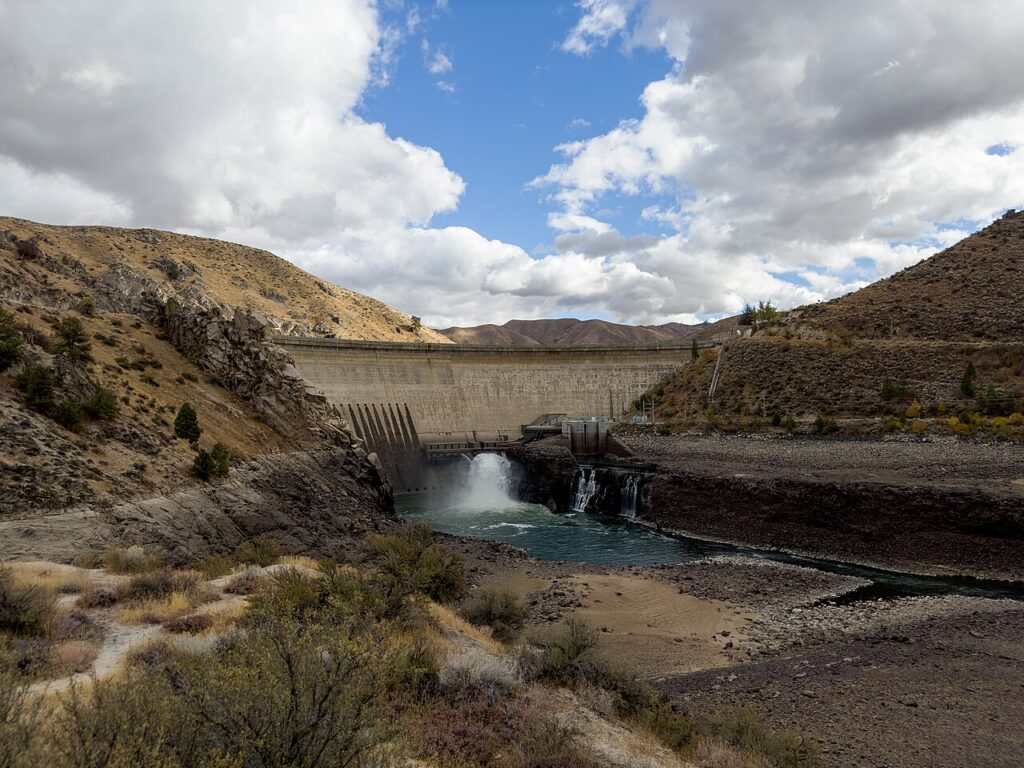
The same ROV that glides along a marina hull is looking along a shell. On a dam it is looking at a face, a gate, or an intake, where depth and current change how much tether you need and whether depth hold is enough. It stops being the right tool if the structure is closed or the current is beyond what the vehicle can hold against—and this article will not give entry steps for any of those places.
Quick answer box
| Right for this job | Looking, from already open water, at a dam face, gate, or intake opening when the owner’s plan and the vehicle’s tether and station-keeping match the water—not treating the pass like a marina hull run. |
|---|---|
| Wrong for this job | Driving a hull-sized plan (short tether, depth hold only, no position system) into intake current, or treating a closed or restricted structure as something the marina ROV “just enters.” |
| The number that decides it | Whether you have more tether than straight-down depth (Blue Robotics: length is not operating depth), and whether you can hold station where the intake current is—not a depth-rating meter reading alone. |
| What the spec leaves out | Intake current speed is not stated on the Bureau of Reclamation pages opened for this article; without that number, a hull-rated tether and depth-hold mode are not enough to decide the dive. |
| Check before you rely on it | Maker pages for tether length versus depth and for whether position hold needs a positioning system; the dam page for which parts are actually named as inspection subjects; stop if the structure is closed or restricted. |
| Last checked | September 29, 2026 |

What the tether and the thrusters are actually fighting
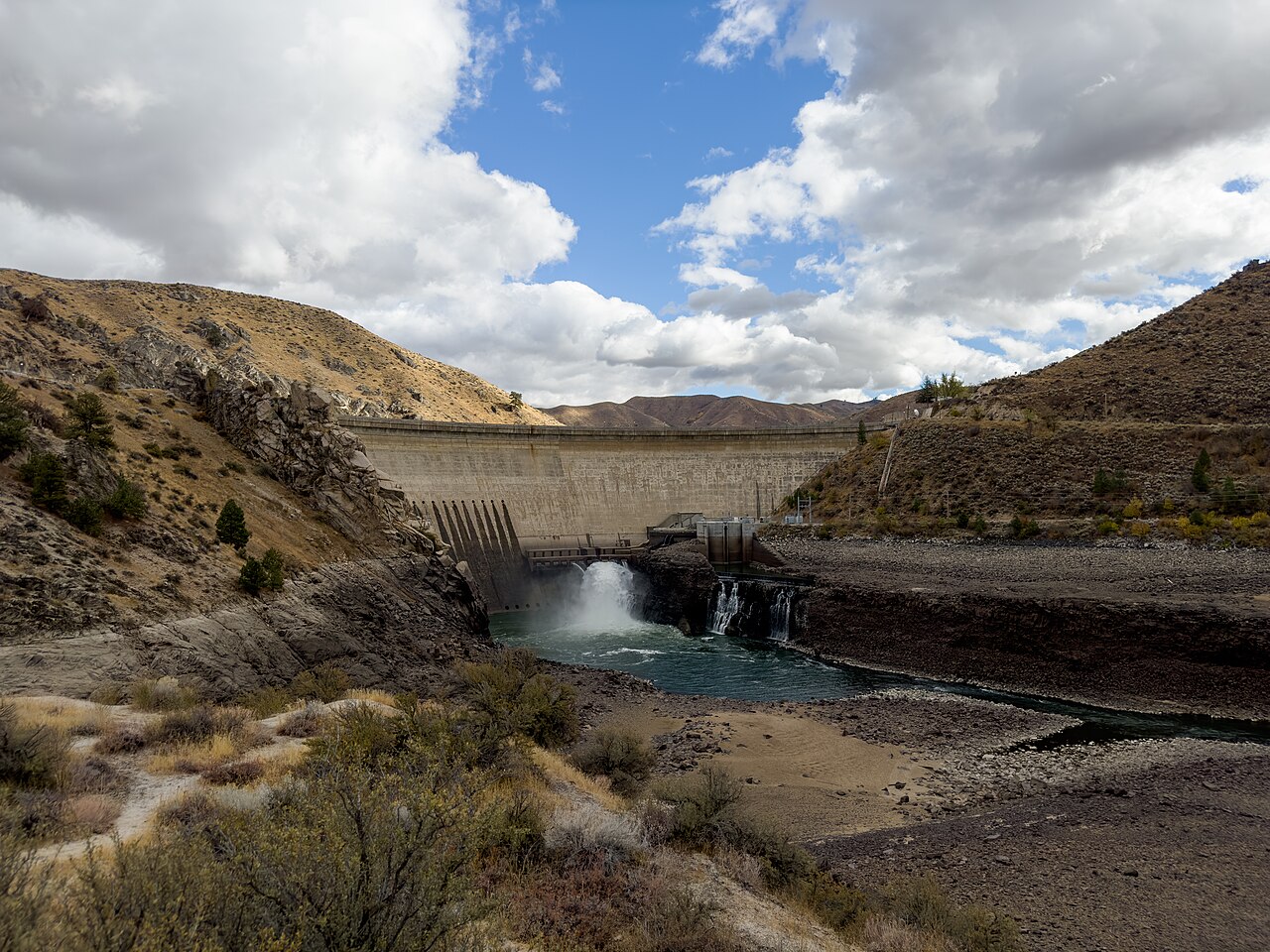
On a marina hull the job is usually a short run under a floating shell. The tether is the physical cable that carries command and video because, as Blue Robotics states in its BlueROV2 buyer’s guide, radio waves do not travel far through water. Vertical thrusters push the vehicle up and down against buoyancy and against the need to hold a camera distance from the surface you are recording. The wall—or the hull—is the subject. Pressure on the housing is the depth rating: how deep the enclosure is designed to go. That rating is not a statement about the current at an intake.
The buyer’s guide also separates two tether products that matter when water is moving. Standard tether is offered for communication distances up to 300 meters, in lengths from 25 to 300 meters. Slim tether is 4 mm in diameter, available from 50 to 200 meters, and is described as creating less drag in strong currents. Neither product turns tether length into a free pass for operating depth. The same guide says tether length does not directly translate to maximum operating depth: you always need more tether than the target depth to cover horizontal travel, current drift, and slack so the vehicle can maneuver.
Blue Robotics’ operating guide is equally plain about what the thrusters are asked to do in software. Depth hold keeps depth unless the pilot commands a climb or dive; it also stabilizes roll and holds heading when the pilot is not turning. Position hold is listed separately and requires a positioning system. Excess tether in the water, the same guide warns, adds drag and raises the chance the line snags. So the vertical thrusters can hold a depth band along a hull while the camera tracks coating and anodes, and still fail the job at a dam if the horizontal force of an intake current asks for station-keeping the base vehicle does not claim without extra sensing.
That is the mechanical difference in one sentence: pressure rating answers “how deep can the housing go,” while tether drag and thruster authority answer “can the vehicle stay in front of this wall or this opening without being pulled into it.” A marina hull pass that only needs depth hold is not the same as holding station in intake current.

Why a dam face is not the same failure mode as a hull
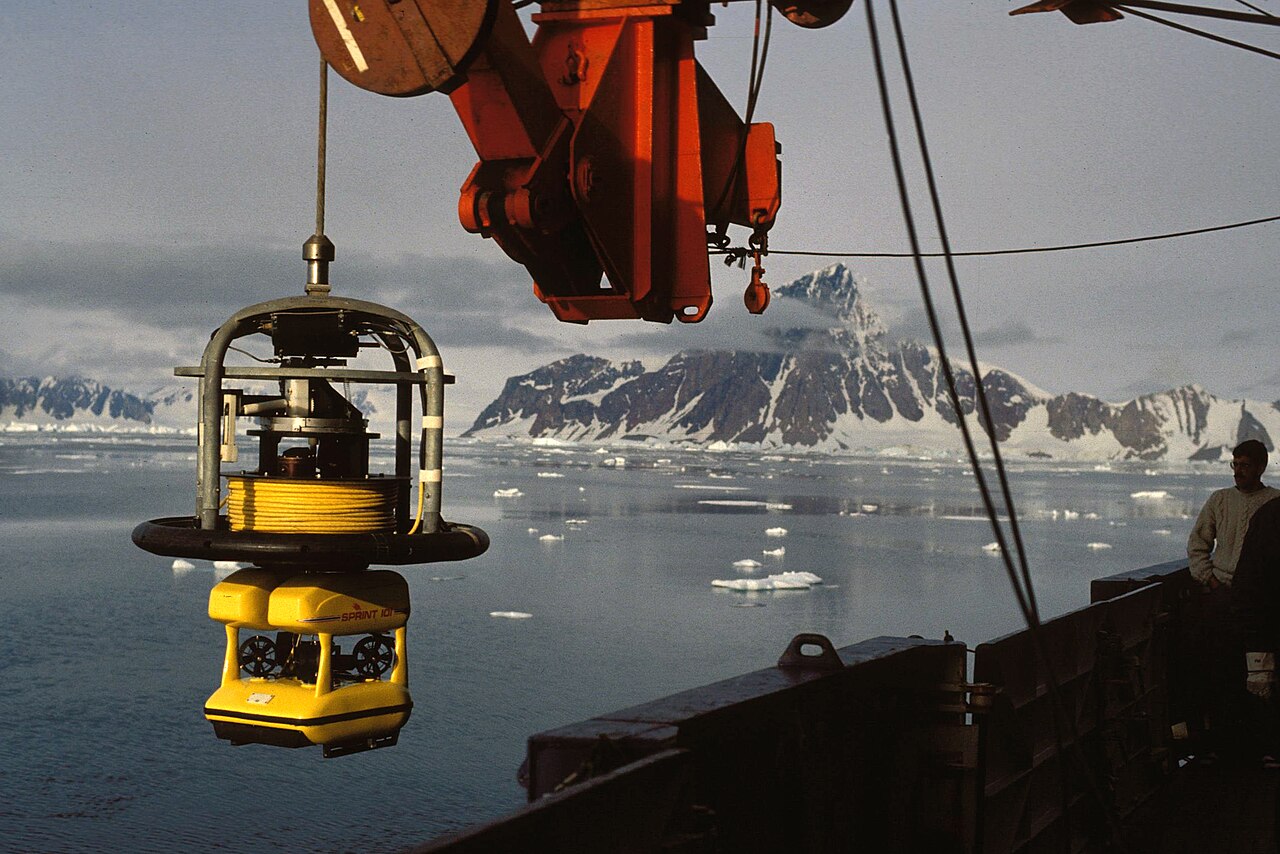
SeaBrilliant’s companion piece “What a hull-inspection ROV has to record” is about the marina and ship job: coating condition, anodes, and ship intakes on a curved shell that a pilot can often run under with a short horizontal leash. That article is the job that fails differently here. A dam face is a large, usually irregular concrete or masonry plane. A gate is a steel or mixed-material water-control surface with seals, guides, and edges that are not a boat bottom. An intake is an opening where water is meant to move into the structure. None of those subjects is “the underside of a leisure hull in a quiet slip.”
Bureau of Reclamation materials opened for this article name the subjects the public research pages actually discuss. A Science and Technology bulletin on ROV data collection at Trinity Dam describes using a long-range ROV to inspect equipment and the intake structure, including reach to a fixed wheel gate at a stated distance of 1,700 feet and approximately 200 feet underwater, with a high-definition camera and a laser scanner, and with video later used to build a three-dimensional model of the upstream face of that gate. A separate Reclamation research bulletin on underwater corrosion assessment of hydraulic steel structures states that ROVs can support diver-less inspection of gate skin plates, trash racks, fish screens, and large-diameter siphons. Reclamation’s FIST Volume 2-8 on inspection of steel penstocks and pressure conduits discusses gates and valves as assessment items and notes that a remotely operated underwater vehicle would be used if a penstock cannot be dewatered, with limitations that include strong current, high turbidity, and small diameters. Those pages do not hand a marina operator a legal duty; they do show that the subjects are faces, gates, intakes, trash racks, and related steel—not antifouling on a fiberglass runabout.
Video still needs a subject, a working distance, and a way to find the same place again. On a hull, the bow-to-stern geometry and the marina berth often give the pilot enough landmarks. On a dam face, joint lines, gate slots, and intake openings become the landmarks—and they sit in water that may be deeper and more directional than a slip. The record fails differently when the camera drifts off the panel because the tether is short for the horizontal run, or when depth hold keeps the altitude while the vehicle slides laterally toward an opening. That is not a rewrite of the hull-recording checklist; it is the reason the same vehicle can look competent on a hull and then produce unusable or unsafe footage at a dam.

Pages you can open yourself
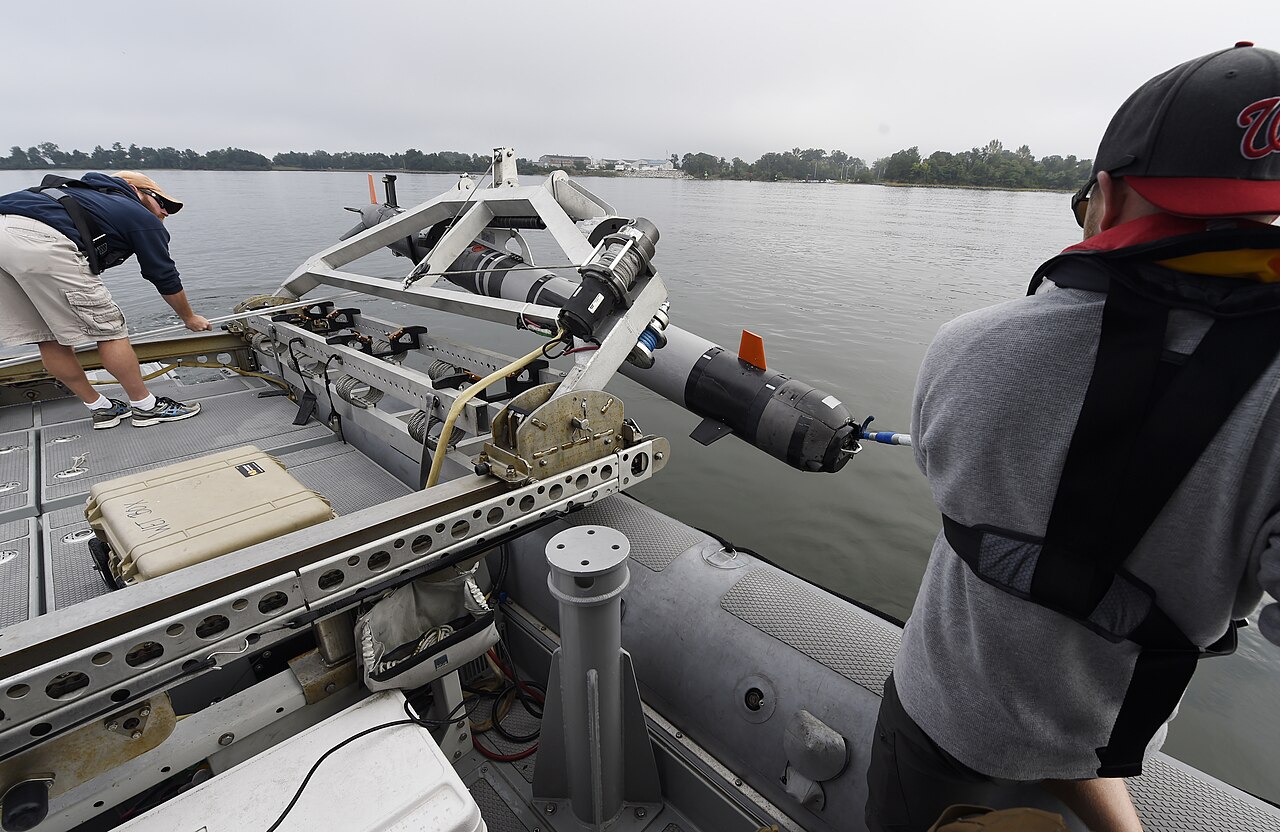
Every numeric and product claim in this article was checked against a page opened on September 29, 2026. Start with the maker pages, then the dam pages, and refuse to invent the missing intake speed.
BlueROV2 buyer’s guide — https://bluerobotics.com/learn/bluerov2-buyers-guide/ — opened September 29, 2026. States that radio does not travel far in water; that standard tether supports communication up to 300 m in lengths 25–300 m; that slim tether is 4 mm, 50–200 m, with less drag in strong currents; and that tether length is not operating depth because extra line is needed for horizontal travel, drift, and slack.
BlueROV2 operation guide — https://bluerobotics.com/learn/bluerov2-operation/ — opened September 29, 2026. States that depth hold holds depth (with roll and heading assist as described on the page); that position hold requires a positioning system; and that excess tether adds drag.
Bureau of Reclamation, “ROV Data Collection and Photogrammetry From Trinity Dam Intake Structure” — https://www.usbr.gov/research/projects/download_product.cfm?id=2572 — opened September 29, 2026. Names ROV inspection of the intake structure and equipment, including a fixed wheel gate, with HD video and laser scanning; states the long-range reach figures noted above. Intake current speed: not stated.
Bureau of Reclamation research project detail for Trinity/Elephant Butte photogrammetry work — https://www.usbr.gov/research/projects/detail.cfm?id=7738 — opened September 29, 2026. Describes a long-range ROV operated on the intake structure at Trinity Dam for HD video inspection and related modeling work. Intake current speed: not stated.
Bureau of Reclamation Research Bulletin 4279, underwater corrosion condition assessment of hydraulic steel structures — https://www.usbr.gov/research/st/bulletins/4279-Bulletin.pdf — opened September 29, 2026. States ROVs can support inspection of gate skin plates, trash racks, fish screens, and large-diameter siphons. Intake current speed: not stated.
Bureau of Reclamation FIST Volume 2-8, Inspection of Steel Penstocks and Pressure Conduits (August 2022 PDF) — https://www.usbr.gov/power/data/fist/FIST_2-8_%288-2022%29.pdf — opened September 29, 2026. Discusses gates and valves among assessment topics and states that a remotely operated underwater vehicle would be used if a penstock cannot be dewatered, with limitations including strong current. A numeric intake velocity in knots: not stated.
USACE district news pages suggested in research for this article did not load successfully from this workstation on September 29, 2026, so no USACE-specific velocity or trash-rack claim from those URLs is used here.
What you decide before the vehicle leaves the boat
Before the dive, treat tether and station-keeping as go/no-go items, not as afterthoughts once the camera is already wet.
First, plan more tether than the straight-down depth, or move the boat closer so the horizontal run shrinks. The buyer’s guide’s rule is explicit: length is not depth. A marina hull job can hide that mistake because the slip is short and the shell is near the dock. A dam face or intake opening often is not under the boat; the extra line for travel, drift, and slack is part of the job definition. If you need the arithmetic method spelled out in one place, read “How to estimate tether length before the vehicle leaves the boat” when that guide is live on this site—until then, stay with the maker statement you can open today.
Second, ask whether the vehicle can hold station in the intake current that actually exists that day. Depth hold is not XY hold. The operating guide requires a positioning system for position hold. If the public dam page you are using does not state a current speed—and the Reclamation pages opened here do not—then the missing number is the intake current, and the decision is not to treat a hull-rated tether length and a depth-hold mode as enough. If the vehicle cannot hold station against that current, do not start the pass.
Third, if the structure is closed or restricted, the job stops. An open-water look at a face, a gate leaf, or an intake opening that is already in accessible water is a different assignment from any attempt to go into a closed dam, a penstock, a gallery, or a secured opening. This guide will not describe how to enter those spaces, how to defeat a lock or interlock, or how to bypass a security control. The right response when the water path is closed is to end the ROV plan, not to invent a route.
One fact that should change the packing list
From the BlueROV2 buyer’s guide opened September 29, 2026: tether length does not directly translate to maximum operating depth—you always need more tether than the target depth for horizontal travel, current drift, and slack. Pack that extra line, or reposition the boat, before you treat a dam face or intake as “just like the marina hull depth.”
The harmful mistake to refuse
The harmful mistake is using a marina-hull plan—short tether sized only for straight-down depth, depth hold without a position system, no honest look at intake current—on a dam intake, or driving a vehicle sized for a marina hull into an intake current or a closed structure. Separating the jobs is the safety move: look at the face, the gate, and the intake from water that is already open when that is the authorized task; stop when current or access says the hull-sized kit is the wrong tool. Do not turn this comparison into an entry procedure.
Read next (plain titles until those URLs return HTTP 200 on this site): “What a hull-inspection ROV has to record”; “How to estimate tether length before the vehicle leaves the boat.”