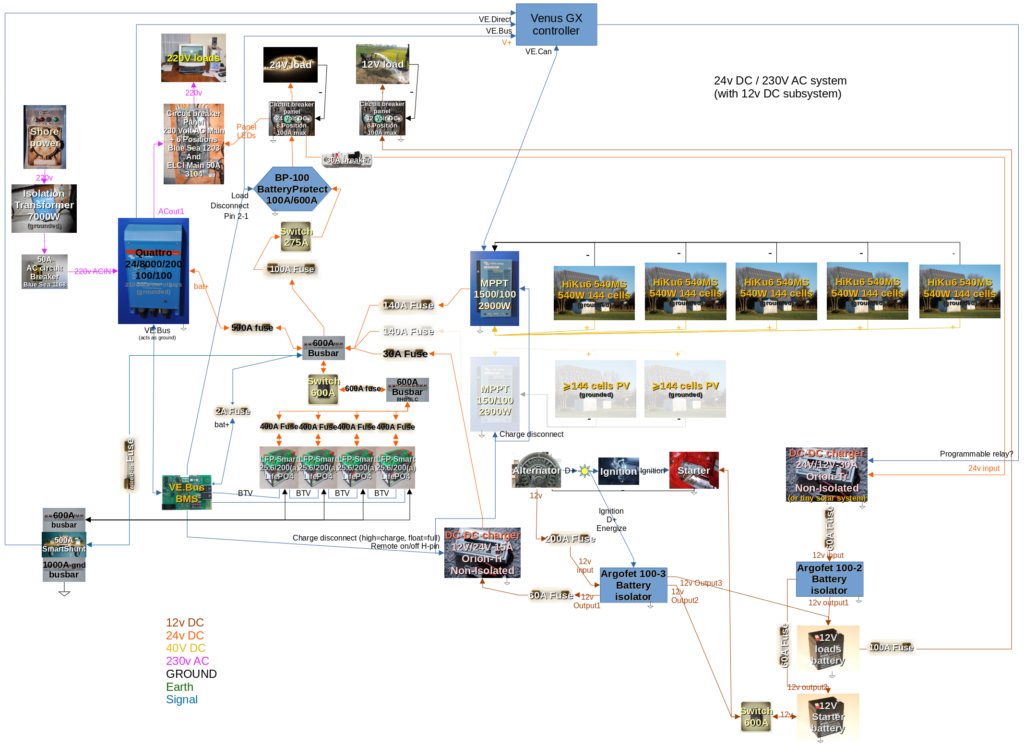
A start battery is sized to crank the engine, and its cold-cranking number is not the amp-hours a house bank needs to run a plotter, a radar, and lights. The house bank is the right tool for those hours. It stops being the right tool if you only know the cranking rating, because that number does not say how long the electronics will run.
Answer box
- Right for this job: Size the house bank from its amp-hour rating when the job is hours of plotter, radar, and lights—not from the start battery’s cold-cranking amps (examples opened September 29, 2026: Odyssey ODP-AGM27M CCA 850; Battle Born BB10012 capacity 100 Ah).
- Wrong for this job: Treating a large CCA or MCA figure as proof the same battery will carry house electronics for a day, or publishing hour counts you did not measure at the dock or underway.
- The number that decides it: The house bank’s amp-hour rating you can read on the label or maker page—not the start battery’s CCA/MCA.
- What the spec leaves out: CCA does not state house runtime. A radar’s amp draw (when stated) still is not a measured bank runtime. Live-sonar current was not opened for this article.
- Check before you rely on it: Which number on the label is CCA or MCA, which is Ah, whether the radar page states amps, and whether you will measure draw later or leave the load off an unsized bank.
- Last checked: September 29, 2026
What the two batteries are doing
Two jobs sit next to each other on many boats, and they ask for different numbers. At the engine, the start battery’s job is a short, high-current crank. At the helm and cabin, the house bank’s job is to feed a plotter, a radar, navigation lights, cabin lights, and whatever else stays on after the key is off. Those loads continue. Cranking does not.
Amp-hours (Ah) describe stored charge at a stated discharge rate—how much capacity the maker rates into the battery for sustained use. Cold-cranking amps (CCA) describe a starting test: how much current the battery can deliver under a cold-start standard for a short interval. Marine cranking amps (MCA) are a related starting figure used on many marine labels. They are not the same unit as amp-hours. A large CCA does not become a long electronic runtime by being printed in bigger type.
On September 29, 2026, ODYSSEY’s product page for the ODP-AGM27M listed Cold Cranking Amps (CCA) at 850, MCA at 975, and a 20-hour nominal capacity of 85 Ah on the same dual-purpose marine battery sheet. That page is useful because it puts the starting test and the capacity rating on one label set—so you can see they are separate lines. Odyssey’s marine-starting education page states the split in plain language: starting a boat requires cranking amps, and a deep-cycle battery is needed to power onboard electronics and troll. Dual-purpose designs try to do both; that does not collapse CCA into hours of radar time.
For a house-bank example opened the same day, Battle Born’s BB10012 product page lists capacity as 100 Ah on a 12 V LiFePO4 deep-cycle battery marketed for marine among other uses. That 100 Ah figure is a capacity rating for deep-cycle service. It is not a CCA number, and this article does not invent how many hours a plotter-radar-lights mix would last on that pack.

Keep the names straight when you walk the boat. The start battery lives for the engine’s crank. The house bank lives for the electronics that stay on. If your boat uses one dual-purpose battery for both, you still read both ratings as two ratings. You do not promote the cranking line into a runtime claim for the plotter.
Think about the time scale each rating assumes. Cranking is seconds of high current while the starter turns. House electronics are minutes and hours of lower, repeated current while the screen stays lit and the radar keeps spinning. Amp-hours are built for that longer schedule. CCA is built for the short one. When a label shows both, the useful habit is to point at each line and name the job it answers before you decide what to buy or what to leave offline.
None of that is a chemistry lecture. This article does not invent how AGM, flooded, or lithium packs behave beyond the ratings printed on the pages opened. The staff point is narrower: read the unit that matches the job. Hours of electronics want amp-hours. Engine start wants a cranking figure. Crossing the units is the failure mode.
How this fails differently from an ROV runtime claim
Read next: How runtime shrinks once the lights and sonar are on. That piece is about an ROV headline minute count that sits beside a named battery size without defining the lights-and-sonar work you may actually run. A best-case minute count without the loads named is the same class of mistake as using CCA as if it were hours on a house bank. In both cases, a number that looks decisive is answering a different question than the one you are about to ask at the dock.
Adding a radar or a live sonar changes the draw on the house bank. It does not rewrite the start battery’s CCA. On September 29, 2026, Garmin’s GMR Fantom 18/24 installation instructions listed input voltage from 10 to 32 Vdc with 2.5 A max, plus standby and transmitting power in watts. That is a published current ceiling for that radar family—not a sea-trial hour count for your bank. This article did not open a live-sonar maker page that stated current draw in amps, so no live-sonar amp figure is used here. The decision rule still holds: do not size the house bank from the cranking number, and do not invent minutes for a load whose amps you never read.
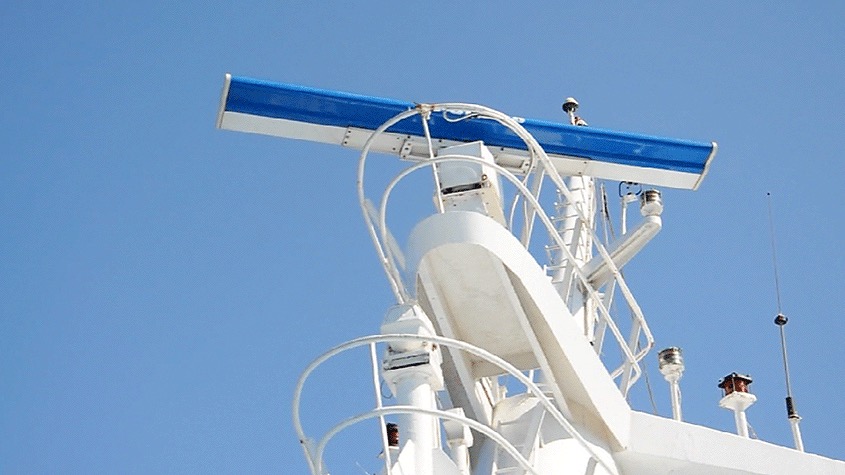

What marine radar shows that the chartplotter does not is a separate display question. Mention it only to keep jobs apart: radar picture quality does not tell you whether the house bank’s amp-hours were chosen from Ah or mistaken for CCA.
What the reader can check
Open the pages yourself. These were opened on September 29, 2026:
- https://eu.odysseybattery.com/products/odp-agm27m-battery-27m-850/ — On the ODP-AGM27M sheet, find Cold Cranking Amps (CCA) 850 and MCA 975 as starting figures, and 20Hr Nominal Capacity (Ah) 85 as the capacity line. Use them as examples of two ratings, not as a shopping list.
- https://www.odysseybattery.com/resources/marine-starting-battery/ — Confirm the maker’s own split: cranking amps for starting; deep-cycle service for onboard electronics.
- https://battlebornbatteries.com/products/100ah-12v-lifepo4-deep-cycle-battery — On the BB10012 page, find Capacity 100 Ah. That is the house-style capacity rating used as an example here. The page does not supply a CCA figure used in this article.
- https://static.garmin.com/pumac/GMR_Fantom_Domes_Installation_Instructions_EN.pdf — On the GMR Fantom 18/24 specifications table, find “From 10 to 32 Vdc, 2.5 A max.” That is stated current draw (maximum). Power consumption is also listed in watts for standby and transmitting. Do not convert those figures into a measured house-bank runtime.
On the battery label in your own locker: which number is CCA or MCA, and which is amp-hours. On the radar or sonar page: amps, or “not stated.” This article does not divide 100 Ah by 2.5 A—or by any assumed plotter-plus-lights mix—to invent hours. Both numbers can sit on the desk as separate published facts without becoming a sea trial.

The decision before you add the radar or the live sonar
Before you add the radar—or a live sonar—the house bank’s amp-hour rating has to be the number you read, not the start battery’s cranking number. If the device’s amp draw is missing from the page you opened, do not invent the hours. Decide whether you will measure the draw later with a meter on your own boat, or leave that load off the bank you have not sized for continuous house service.
That decision is operational, not ornamental. A plotter that stays on all day, a radar that transmits for fog or night runs, and lights that stay lit while you work the deck all ask the house bank for sustained current. The start battery’s CCA answered a different test on a cold day for a short crank. Mixing those answers is how a boat that still starts ends up with a dark helm.
If Garmin’s Fantom dome instructions give you 2.5 A max for that radar, you still have only one load’s published ceiling—not the plotter’s draw, not the lights’ draw, and not a bank runtime. Live sonar remains an unstated amp load in this article because its maker page was not opened here. Unstated is not zero. Unstated means you either measure before you rely on the bank, or you keep the load off until you have Ah and amps you can defend without inventing minutes.
Write the decision down before the box arrives. First: the house bank Ah you actually have, taken from the capacity rating, not from CCA. Second: which new loads will join the bank, and whether each load’s amps are stated on a maker page you opened. Third: if a load’s amps are missing, choose measure-later or leave-off—do not fill the blank with a hopeful hour count. That three-step note is enough to stop the common swap of a cranking number for a house plan.
One specific sourced fact
Two different ratings on two different battery types, opened September 29, 2026: the ODYSSEY ODP-AGM27M product page lists Cold Cranking Amps (CCA) of 850 as a starting rating, and the Battle Born BB10012 product page lists Capacity of 100 Ah as a deep-cycle capacity rating. Those are examples of the two kinds of numbers—not a shopping list and not a runtime. Separately, Garmin’s GMR Fantom 18/24 installation instructions list 2.5 A max input current for that radar; that is a device current figure, not house-bank hours.
The harmful mistake
The harmful mistake is running the plotter, radar, and lights from a start battery because the cranking number looked large, or publishing an hour count you did not measure. A CCA of 850 looks impressive next to a quiet helm. It still does not say how long the electronics will run. A 100 Ah house rating is the right kind of number for that question—and even then it is only a capacity rating until someone measures the real draw on that boat. Invented minutes, whether pasted from a cranking line or from arithmetic dressed up as a sea trial, fail the same way a headline ROV runtime fails when lights and sonar were never in the test: the number answers a job you are not doing.